A clinician finishes the last visit of the day, clicks through one more chart, and finds the note still unfinished. The patient is gone, the staff has moved on, and the report still has to be accurate, legible, and defensible. That is where a good sample of medical report earns its keep, not as a form to copy, but as a working pattern for safer documentation.
Understanding the Clinical Documentation Challenge
The burden is real because the report is not just paperwork. In an observed 2019 study, documentation took 12.7 minutes per encounter with Cerner and 14.3 minutes with Sparrow, and composing the report accounted for more than half of total encounter time in the observed visits (PMC study). In practice, that means a clinician can finish the exam and still spend more time writing about it than delivering it.
After-hours charting is the problem most people recognize first
The more persistent strain shows up after the clinic closes. A nationally representative U.S. study found physicians spent 1.77 hours per day on documentation outside regular office hours, and the average was 1.84 hours per day among physicians using electronic health records (JAMA Internal Medicine study). The same study estimated about 125 million hours of after-hours documentation in 2019, which puts a number on what most practices feel every week.
Practical rule: if the note can't be completed, verified, and signed without extending the day, it isn't ready for routine use.
The missing piece in most online examples is not wording. It is workflow. A useful sample has to do more than show headings. It has to support review, correction, and final sign-off, while keeping the report useful in both U.S. and U.K. settings. That means the structure has to fit clinical reasoning, legal review, billing review where relevant, and patient-facing clarity without turning the note into a transcript.
Essential Structure of a Medical Report
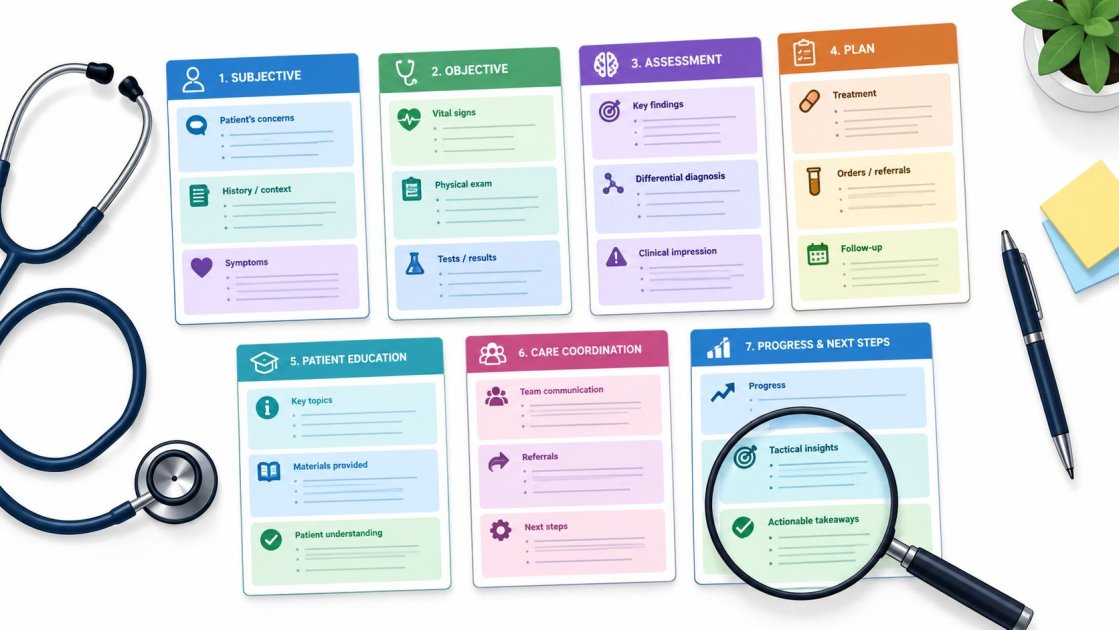
A report starts to fail when the structure is unclear. A clinician needs a note that separates what the patient reported, what was observed, what was concluded, and what happens next. Subjective captures symptoms, concerns, and history. Objective records measurable findings. Assessment states the clinician's interpretation, and Plan records treatment, education, follow-up, and monitoring (AMA SOAP guidance). That format keeps the note readable and makes it easier to defend later.
SOAP works for narrative, FHIR works for exchange
A reusable template needs both the clinical story and the data structure. SOAP gives the clinician a clear narrative. FHIR DiagnosticReport gives systems the fields needed to exchange results safely, including a stable identifier, status, report code, patient or subject, responsible performer, linked observations, specimen details where relevant, interpretation, and a formatted representation when needed (FHIR DiagnosticReport). That matters when one report must remain readable in the chart and still move cleanly between systems.
For a sample of medical report, the practical goal is not to choose one model over the other. It is to keep the clinical note usable by people and the report usable by software. The two layers solve different problems, and both matter in routine practice.
A strong draft also keeps clinical language and coding language separate enough for review. Suggested diagnosis codes can sit in the draft, but they should not replace the clinician's assessment. The same applies to conclusion fields in structured reports. The note should stay readable first, then interoperable, then billable where local rules allow.
Use this as the structural backbone for a reusable template, and pair it with a medical report template that supports human narrative, machine structure, and a clear place for verification.
Key Data Elements for Clinical Safety
A report becomes fragile when it blurs facts. The first line of defense is simple: identify the patient correctly, then document the encounter in a way that makes later review possible. That means name, date, setting, and the reason for the visit need to be clear before the note moves into symptoms or findings.
Separate what the patient said from what the clinician found
Subjective material belongs in the history. Objective material belongs in the examination, vitals, labs, and imaging. The distinction sounds basic, but many weak notes collapse both into one narrative, which makes later legal review harder and can create confusion about what was observed versus reported. A good note also clearly acknowledges uncertainty, especially when a diagnosis is provisional.
The safest notes read like a careful handoff, not a polished summary that hides doubt.
A defensible report should also show:
- Chief complaint and history of present illness, written in plain clinical language.
- Laterality and location, especially when pain, rash, injury, or procedure details could be confused.
- Assessment language, including whether the impression is working, confirmed, or differential.
- Plan ownership, so every test, referral, medication change, and follow-up task has a responsible party.
- Patient instructions, phrased so the patient can act on them without guessing.
Many samples fail here. They show headings, but they do not show accountability. A note that says follow up “as needed” is weaker than a note that says who will review results, when the patient should return, and what should trigger escalation. For U.K. and U.S. clinicians alike, that clarity matters more than decorative completeness.
A Comprehensive Sample Medical Report
A common primary care visit makes the format easy to see. A patient comes in for cough, fatigue, and sinus pressure. The clinician examines the patient, reviews the history, documents the findings, and records a plan that the patient can follow.
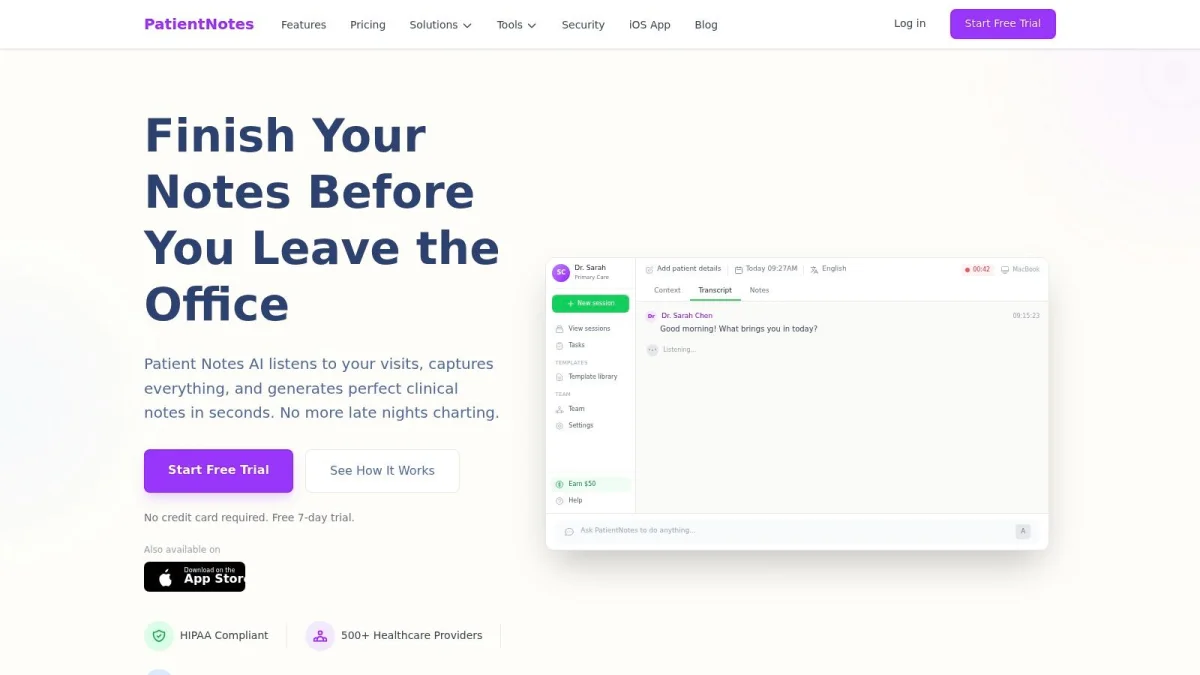
Sample outpatient note
Patient: Jordan Lee
Date: 2026-10-09
Visit type: Office visit
Reason for visit: Cough, nasal congestion, fatigue
Subjective
The patient reports 6 days of nasal congestion, dry cough, and mild facial pressure. No shortness of breath, chest pain, or wheezing is reported. The patient states symptoms are worse in the morning and somewhat better with rest and fluids.
Objective
Temperature is normal. The patient appears tired but not in distress. Nasal mucosa is swollen, the throat is mildly irritated, lungs are clear to auscultation, and oxygen saturation is stable. No focal neurologic deficit is noted.
Assessment
Upper respiratory symptoms, likely viral. Sinus pressure without signs of severe bacterial illness. Fatigue appears related to the acute illness.
Plan
Supportive care with rest, hydration, and symptom relief. Return precautions reviewed for worsening fever, shortness of breath, chest pain, or persistent symptoms. Follow-up advised if symptoms do not improve or if new red flags appear. Patient understands the plan.
Patient instructions
Drink fluids, rest, and use over-the-counter symptom relief only as directed on the label. Seek urgent care if breathing becomes difficult or if symptoms worsen quickly.
Coding review
Possible ICD-10 code suggestion for clinician review: J06.9.
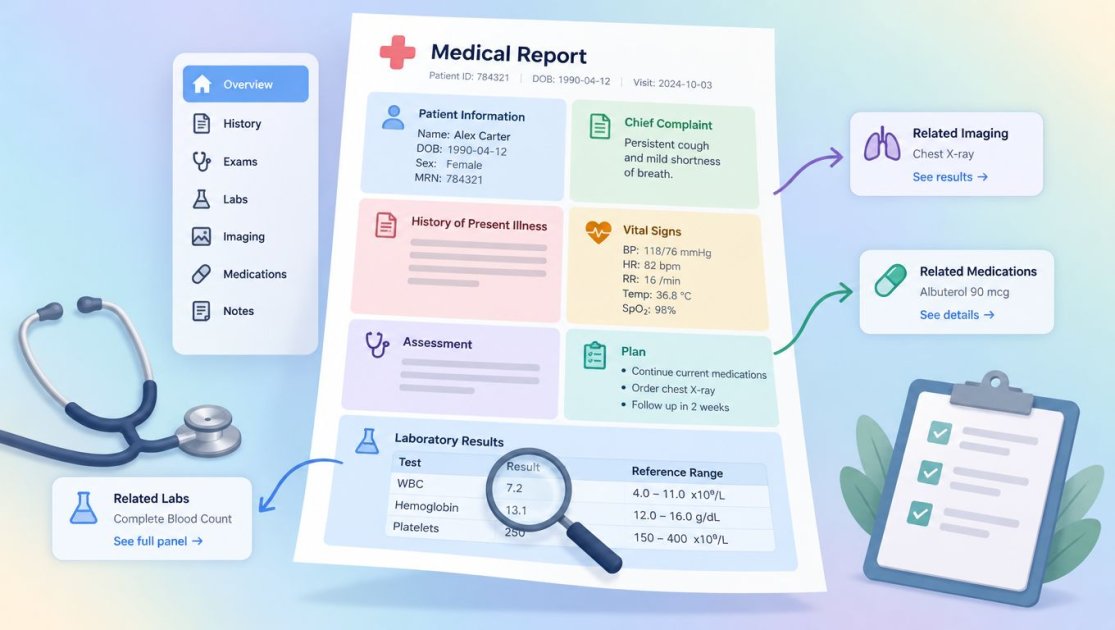
For a working note, the important parts are visible. Subjective contains patient-reported symptoms. Objective contains observed findings. Assessment is the clinician's conclusion, not the patient's description. Plan includes what happens next and who owns the follow-up.
The note also shows the practical balance that matters in daily care. It is brief enough to finish, but complete enough to support continuity. That balance is what most generic templates miss, because they either overstuff the chart or leave out the patient-facing part.
A report like this can be adapted for other common outpatient scenarios by changing the complaint, the exam, and the plan while keeping the same backbone. That is the true value of a good sample of medical report; it gives the clinician a repeatable shape without forcing the same content every time.
Adapting Reports for Specialty Practice
Specialty documentation works best when the shared skeleton stays intact and the specialty-specific details move into the right place. Cardiology needs symptom timing, exam details, and test interpretation. Psychiatry needs mental status, risk review, and treatment response. Dentistry and periodontics need procedure details, oral findings, and post-procedure instructions. The same core report can support all of them if the template is flexible.
The specialty determines what must never be left out
A cardiology progress note usually emphasizes chest symptoms, exertional tolerance, medication response, and test review. A psychiatry consultation needs mood, affect, thought process, safety concerns, and current treatment adherence. A dentistry procedure note should capture the procedure performed, anesthesia used, tissue findings, and aftercare. A generic note often misses these specialty-specific anchors, which is why fixed templates fail quickly in real clinics.
| Specialty | Primary Focus Area | Common Templates |
|---|---|---|
| Cardiology | Symptoms, cardiac exam, test review, medication follow-up | Progress note, consultation note |
| Psychiatry | Mental status, risk review, response to treatment | Consultation note, progress note |
| Dentistry | Procedure detail, oral findings, post-op instructions | Procedure note, letter |
| Primary care | Broad symptom review, diagnosis, plan, follow-up | SOAP note, consultation note |
Specialty templates are useful because they preserve the core structure while prompting the clinician for the details that matter most in that setting. A well-built library should let a clinician start broad and then narrow into specialty language without losing the distinction between history, findings, impression, and plan. The template should not force every encounter into the same shape.
For a practical example of how templates are organized, see the internal reference on a progress note example. It helps show how a note can stay concise without dropping the fields that matter.
A thoughtful sample of medical report adapts by specialty, but it never abandons the logic of clinical traceability. That is the part worth preserving.
Manual Documentation vs AI-Assisted Workflows
A full clinic day exposes the trade-off fast. Manual charting gives direct control, but it also leaves the clinician to listen, recall, type, edit, and verify every detail. That is manageable at low volume. It becomes harder when visits run long or the case is complex. AI-assisted drafting changes the workflow by capturing the conversation, separating speakers, and turning the encounter into a structured note that still needs review.
Where automation helps, and where it doesn't
Structured drafting lowers the mental load of turning a visit into prose. It also helps preserve follow-up tasks and plain-language patient instructions, which are often the first items lost when a note is written under pressure. In a small practice, that matters because missed tasks create more work later.
The downstream revenue side matters too. A practical resource is automate medical billing workflow, especially when documentation review and billing review sit with a small team. The aim is not to hand off clinical judgment. The aim is to make the rest of the workflow less brittle.
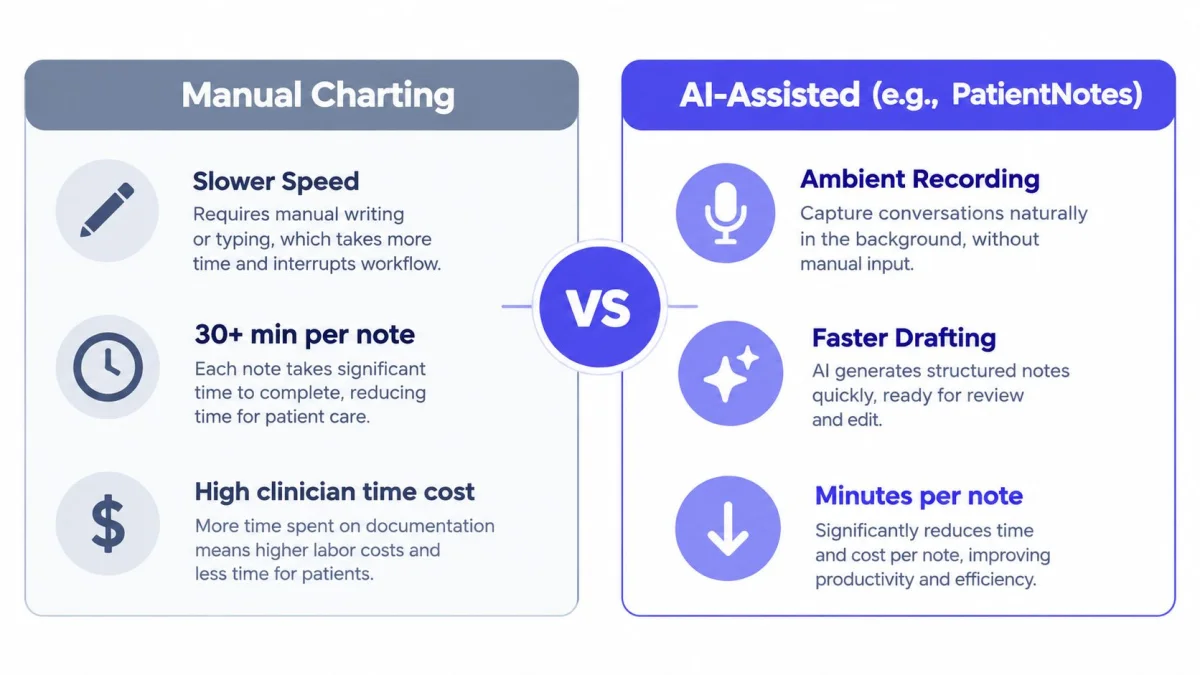
For small practices evaluating a draft-to-note workflow, PatientNotes is one option. It records visits, transcribes them, and drafts structured notes with tasks, code suggestions for U.S. billing, and patient instructions. It also offers specialty templates, an AI template builder, a native iOS app with offline recording, and copy-and-paste support for most EHRs, with Semble as the only direct integration. The trade-off is straightforward, every final note still needs clinician review before signing.
Practical caution: if the workflow saves time but creates review debt, the clinic has only moved the burden, not reduced it.
The better test is simple. A useful workflow lets the note be captured once, checked once, and signed once without losing clinical accuracy.
Security, Consent, and Legal Defensibility
A report sits in the legal record, so security has to be built into the workflow, not added after the fact. HHS frames HIPAA Security Rule compliance around administrative, physical, and technical safeguards that protect the confidentiality, integrity, and availability of electronic protected health information, supported by documented risk analysis (HHS HIPAA Security guidance). Access control, audit history, encryption, and retention practices belong in the same discussion as the note itself.
Final accountability stays with the clinician
If a business associate handles ePHI, the written agreement has to define permitted uses, require safeguards, address subcontractors, and require reporting of incidents and breaches (HHS BAA provisions, HHS Security Rule and business associate requirements). HHS also says a covered entity using a cloud service provider to maintain ePHI without a BAA violates HIPAA Rules. The contract is part of the report lifecycle, not a procurement detail.
Clinician review still has to happen before finalization. The final record should separate confirmed facts, patient instructions, follow-up tasks, and coding suggestions so automation does not blur accountability. That matters even more when a draft note comes from speech, because a polished draft can still carry wrong medications, laterality, or timing if nobody checks it carefully.
Patient consent matters too. If a conversation is recorded or summarized, the practice needs a clear process for disclosure, correction of factual errors, and clinician approval of the final record. A report that looks tidy but has no review trail is still a weak record.
For a practical summary of contract and safeguard issues, the linked overview on HIPAA BAA requirements is useful background. A defensible report can be traced, corrected, and attributed without confusion.
Implementing the Report Workflow in Practice
Start with one template, not five. Choose the visit type you see most often, define the fields that matter, and keep using it until the team can complete it without guessing. A small practice gets more value from consistency than from a large library of notes that nobody finishes.
Set the structure first with subjective, objective, assessment, plan, follow-up, and patient instructions. A usable starting point is the medical-report-template. From there, the workflow can support the way the visit is documented.
A simple rollout sequence
- Record the encounter cleanly. Capture the conversation in a way that preserves speaker separation and keeps the draft readable.
- Verify the facts. Check medications, allergies, diagnoses, measurements, laterality, and pending results.
- Assign follow-up ownership. Every task needs a person and a timeframe.
- Sign only after review. The draft does not become the final note until the clinician confirms it.
A patient intake coordinator can lower noise before the visit by collecting basic demographic and scheduling details, which gives the clinician a cleaner starting point. That helps with efficiency, but it does not replace clinical review. It only removes avoidable gaps before documentation begins.
Quick checklist: watch for copy-forward errors, missing red flags, vague follow-up language, and patient instructions that sound complete but are hard to act on.
The workflow also has to fit real constraints. If the practice uses different systems, notes may need to be pasted into the record instead of pushed directly. If the clinic uses a structured AI drafting tool, the gain comes from less rework, not from skipping review. A good note process should feel repetitive in the right way, because it works the same way each time.
For clinicians who want a structured drafting option, PatientNotes organizes recorded consultations, draft reports, follow-up tasks, and patient instructions into one workflow, with per-seat pricing and a trial before commitment. It fits this topic because the goal is to turn a live encounter into a report that can be checked, signed, and used. Visit PatientNotes to see how that workflow is organized for individual clinicians and small practices.