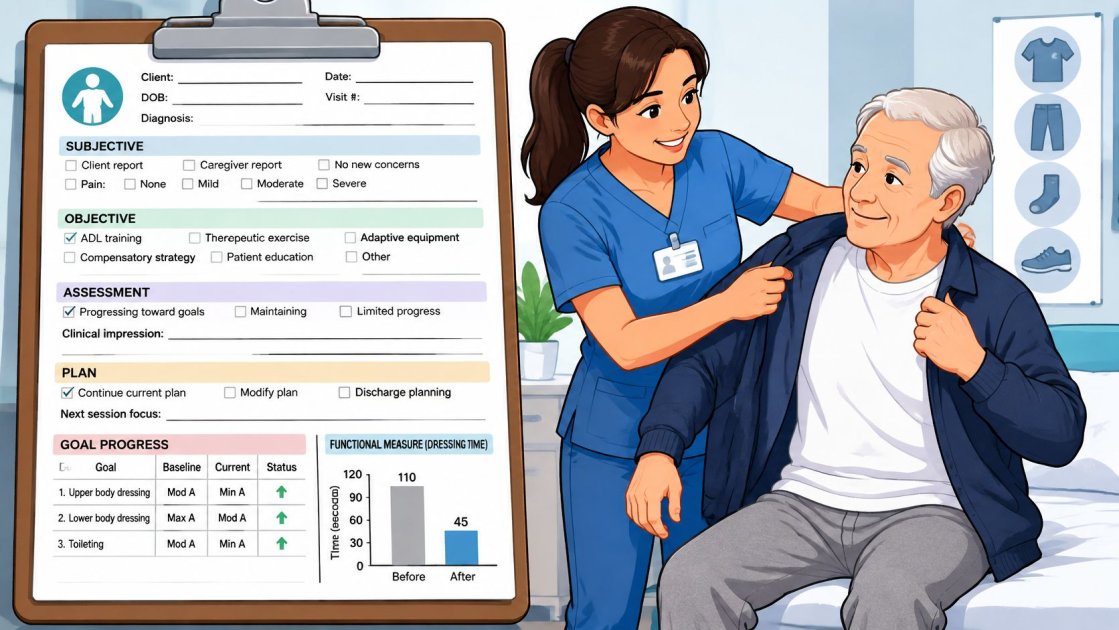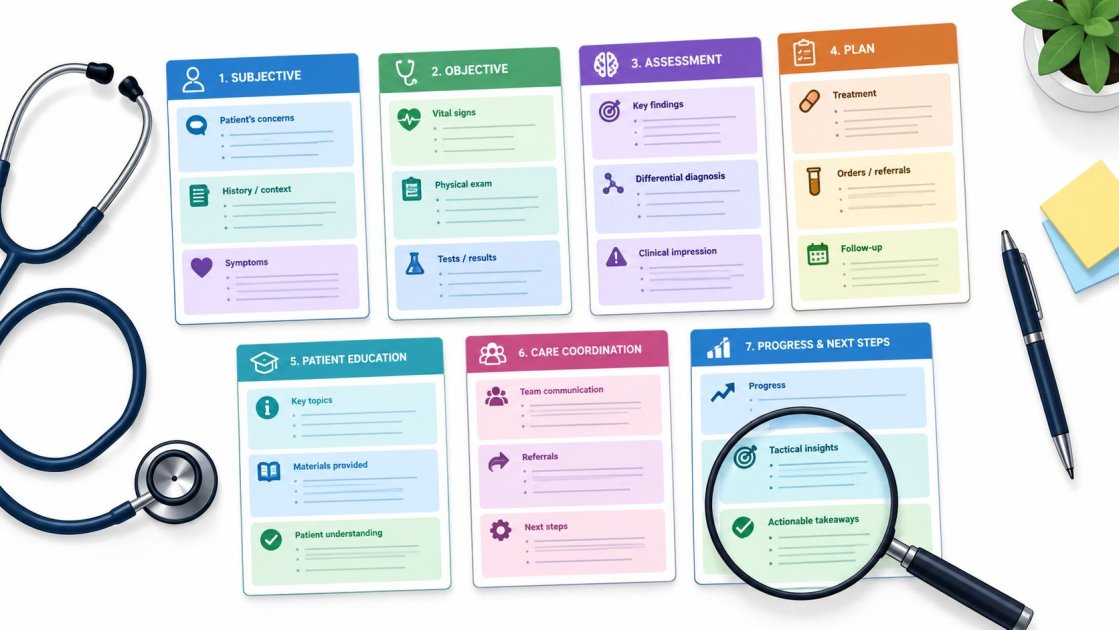
A useful progress note shows what changed, why the clinician acted, and what happens next. The right format depends on the encounter: SOAP works broadly, while H&P, psychiatry, physical therapy, and specialty formats need different evidence, measurements, and follow-up details.
That distinction matters because electronic documentation now takes a measurable share of clinical work. A systematic review found that physician documentation time rose from 16% of total work before EHR implementation to 28% afterward, a 12 percentage-point increase and a 75% relative rise in the share of work devoted to documentation (systematic review and meta-analysis). A complete note can still be weak if it repeats the last visit, hides the clinical reasoning, or leaves the next task unclear.
This list gives seven practical progress note examples for individual clinicians and small practices in the United States and the UK. Each sample uses concise wording, separates reported information from findings, and makes interval change visible. The examples are illustrative. They don't replace current CMS, NHS, specialty-society, payer, or local requirements. For broader documentation principles, see this guide to clinical documentation improvement.
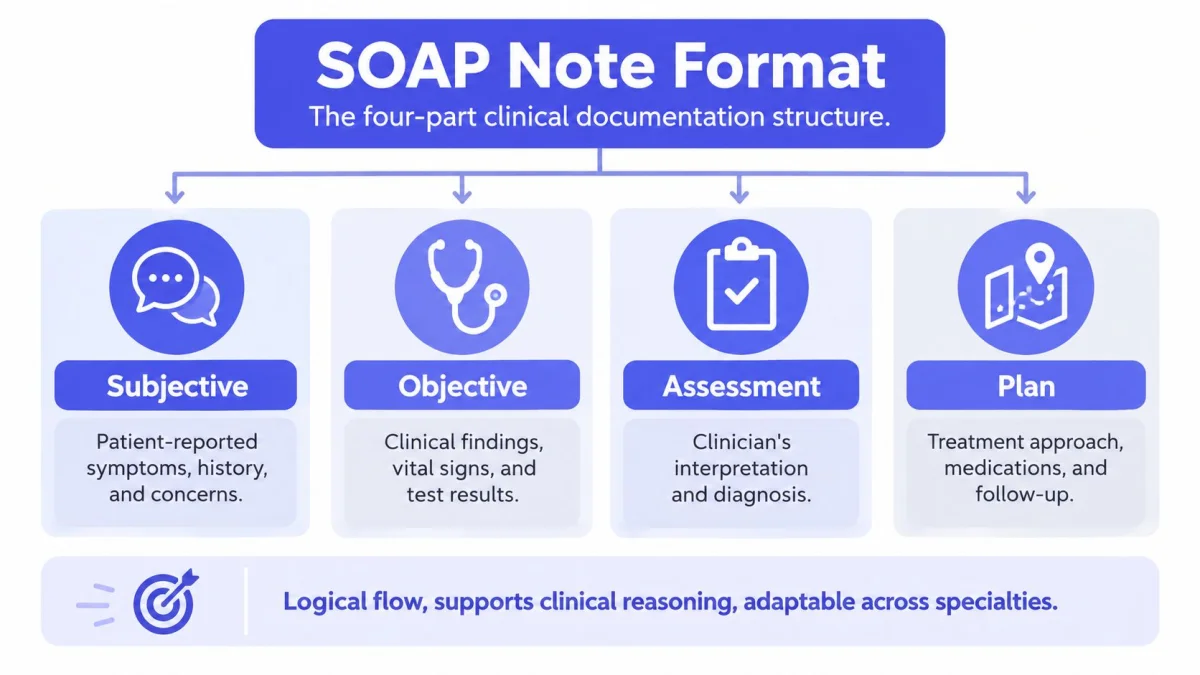
1. SOAP Note Format
SOAP remains the broadest starting point for a progress note example because it separates four kinds of information. Subjective records what the patient reports. Objective records findings, measurements, and results. Assessment explains the clinician's interpretation. Plan identifies treatment, education, follow-up, and outstanding tasks.
A primary care note for hypertension might read:
- Subjective: “Reports no dizziness, chest pain, or missed doses. Home readings remain above the agreed target.”
- Objective: “Blood pressure high in clinic. No acute cardiopulmonary findings.”
- Assessment: “Hypertension remains above goal based on home and office readings. Medication tolerance is acceptable.”
- Plan: “Review adherence and sodium intake. Adjust treatment after confirming the home log. Repeat measurement at follow-up.”
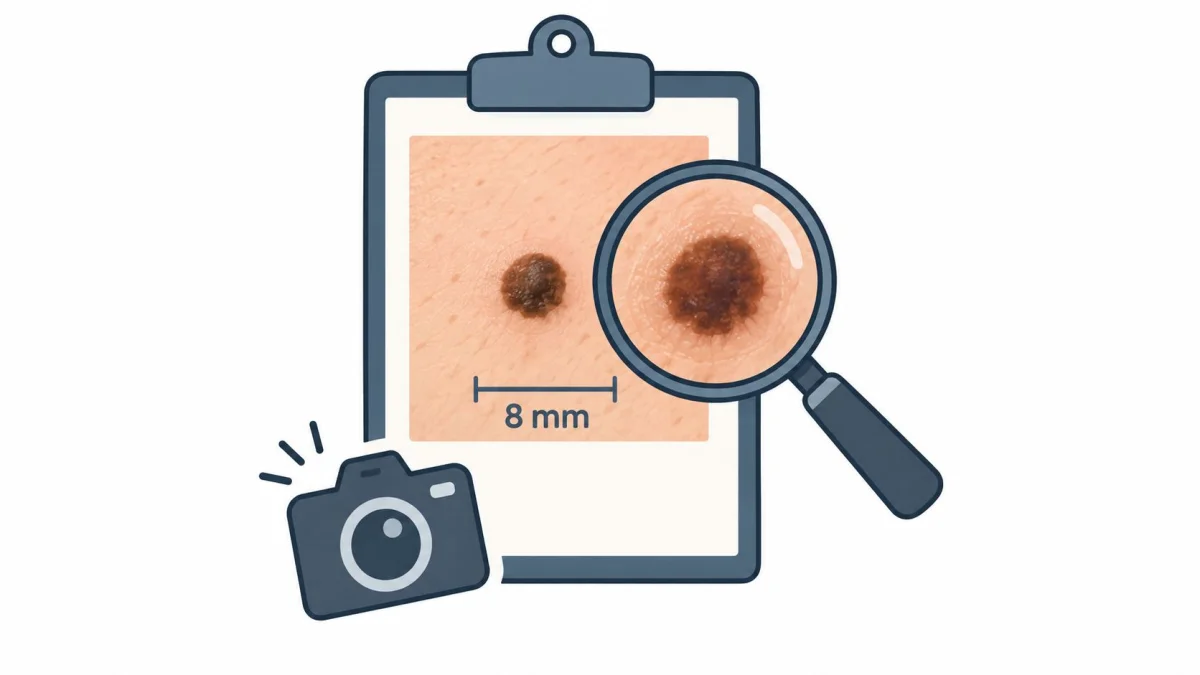
The same structure can support dermatology. “Asymmetric pigmented lesion on the upper back with irregular border” belongs in Objective. “Lesion requires tissue diagnosis” belongs in Assessment. “Discuss shave biopsy, document consent, send specimen for pathology, and communicate results” belongs in Plan.
What makes SOAP useful
The sections prevent a common error: presenting an interpretation as if the patient said it. They also make review faster. A clinician can find the patient's concern, the evidence, the decision, and the next action without searching through a long narrative.
A SOAP template should still be narrow. Large blocks of copied text can make a note harder to review. In a study of 203,728 physicians, those in the highest note-length decile spent 39% more time in the EHR after hours than the median physician and closed 5.6 percentage points fewer visits on the same day (large ambulatory EHR analysis). The practical lesson is to capture decision-relevant content, not every possible field.
PatientNotes can record a consultation, organize it into a SOAP template, extract tasks, and suggest codes for review. Its SOAP note examples for nurse practitioners show how the format can be adapted without treating one template as suitable for every specialty.
2. History and Physical Template
An H&P is the right progress note example when the clinician needs a reliable baseline. It suits a new patient evaluation, hospital admission, complex consultation, or preoperative assessment better than a short follow-up format. The note commonly brings together the chief complaint, history of present illness, medical and surgical history, medications, allergies, family history, social history, review of systems, examination, assessment, and plan.
A useful H&P doesn't turn every section into an automatic essay. A patient with several chronic conditions may need a detailed timeline for the presenting problem, but unrelated systems should remain relevant and concise. For a cardiology consultation, the history should clarify symptom onset, exertional pattern, associated symptoms, prior testing, medication use, and relevant risk context. The examination should record the findings that influence the differential and next decision.
Practical rule: A comprehensive note should be broad enough to establish the baseline, but focused enough that another clinician can identify the active problem quickly.
H&P wording that supports continuity
Weak wording says, “Patient has a long cardiac history.” Stronger wording identifies the condition, the relevant change, and the evidence: “Reports new exertional chest pressure over the past several weeks, occurring after walking uphill and resolving with rest. Prior cardiac evaluation and current medications reviewed. Further assessment planned because the symptom pattern has changed.”
That wording distinguishes history from today's report. It also gives the next clinician a reason for the plan.
An H&P can be recorded during a long consultation rather than reconstructed from memory. PatientNotes offers a native iOS app with offline recording, including recording while the screen is locked. The clinician can then review the generated sections and fill any gaps before signing. A charting guide for doctors provides related workflow guidance.
The H&P template shouldn't be used automatically for every established-patient visit. If the clinical question is narrow, a focused progress note may communicate the decision more clearly and create less review burden.
3. Psychiatry Progress Note Format
A psychiatry progress note must show more than a diagnosis and a medication list. It should connect the patient's current symptoms, observed mental status, risk assessment, intervention, response, and follow-up plan. The mental status examination may include appearance, behavior, speech, mood, affect, thought process, thought content, perception, cognition, insight, and judgment, but the note should include findings that were assessed.
For example:
- Subjective: “Reports lower mood and reduced interest since the previous visit. Sleep is fragmented. Denies suicidal or homicidal ideation.”
- Objective: “Speech is soft but coherent. Affect is constricted with occasional brightening when discussing family. Thought process is linear. No overt response to internal stimuli observed.”
- Assessment: “Depressive symptoms persist, with partial response to current treatment. No acute safety concern identified from today's assessment.”
- Plan: “Review medication response and adverse effects. Continue psychotherapy focus on behavioral activation. Reassess mood, sleep, functioning, and risk at follow-up.”
“Appears depressed” is less useful than a specific observation linked to the clinical interpretation. The note should also distinguish the patient's words from the clinician's observation. A copied-forward risk statement is unsafe if the clinician hasn't reassessed current risk.
Document intervention and response
Mental health documentation should show what happened in the session. “Support provided” doesn't tell a later clinician whether the intervention addressed the treatment goal. Better wording identifies the method and response: “Used grounding and cognitive restructuring to address panic-related predictions. Patient identified an alternative interpretation and agreed to practice the skill before the next session.”
A psychiatry template can prompt the clinician to record risk, medication response, functional impact, and therapeutic intervention without forcing irrelevant medical fields. PatientNotes supports notes and tasks in the clinician's own language, as well as specialty templates and an MSE builder.
The clinician remains responsible for checking every generated sentence. Ambient documentation may reduce note time, but a 2025 study reported that note time decreased from 6.2 to 5.3 minutes per appointment while note length increased by about 259 characters (JAMA Network Open study). More text isn't automatically more accurate. Attribution, negations, medications, risk findings, and agreed tasks require direct review.
4. Physical Therapy and Rehabilitation Progress Note
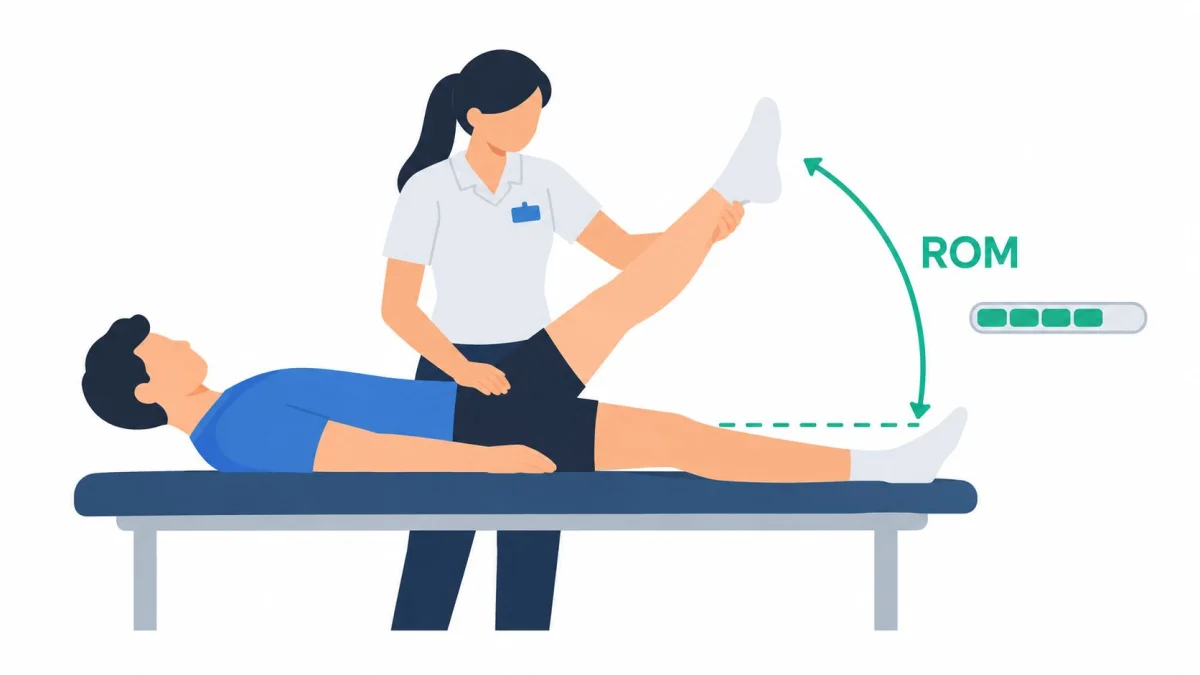
A physical therapy progress note should make function visible. Pain matters, but pain alone rarely explains whether the patient can walk, climb stairs, dress, work, or complete a home exercise program more effectively. The note should connect the intervention to a functional result and show the change from the prior visit or baseline.
A focused example might read:
- Reported status: “Reports less pain when rising from a chair but continues to use the railing on stairs.”
- Objective change: “Knee flexion is greater than at the prior reassessment. Quadriceps activation remains reduced. Ambulation with walker is safer but still limited by fatigue.”
- Intervention: “Completed progressive strengthening, gait training, and stair practice with verbal cues.”
- Response: “Completed the planned exercises without increased symptoms. Required fewer cues during step-through gait.”
- Assessment: “Functional mobility is improving, but strength and stair control remain limited.”
- Plan: “Progress strengthening within tolerance. Review home exercise technique and reassess stair performance at the next visit.”
The exact measurement should come from the encounter. If range of motion, strength, a standardized outcome measure, or walking tolerance was assessed, record the result and the comparison point. If it wasn't measured, don't imply that it was.
Show progress, barriers, and skilled need
A useful rehabilitation note can also document limited progress. “No improvement” is incomplete. “Walking tolerance remains unchanged because the patient completed the home program inconsistently and stopped after increased soreness” gives the clinician a reason to modify education or treatment.
The note should state why skilled care remains appropriate, without relying on a generic phrase such as “continue therapy.” It might say, “Patient needs skilled cueing to correct knee alignment during step-downs and to progress loading safely because independent performance remains inconsistent.”
PatientNotes offers specialty templates across 37 specialties, including physiotherapy, physical medicine and rehabilitation, and occupational therapy. A recording workflow can capture exercise performance and patient feedback, but the clinician must verify measurements, adherence, goals, and the next progression.
5. Dermatology Consultation and Treatment Note
Dermatology notes depend on precise description. A lesion should be identifiable at the next visit without relying only on a diagnosis label. Location, laterality, morphology, distribution, associated findings, change over time, and the patient's symptoms often matter more than a long general review of systems.
A concise example is:
“Upper back, 8 mm asymmetric pigmented lesion with irregular border and mixed brown and black color. Patient reports recent change in appearance. Shave biopsy performed after discussion of risks and alternatives. Specimen sent for pathology. Patient advised how results will be communicated and when to seek care for complications.”
The wording identifies the lesion, explains why the procedure occurred, and records the immediate next step. It doesn't claim a final diagnosis before pathology. A dermatology note for acne would use different evidence, such as distribution, severity, previous treatment response, adverse effects, and the rationale for changing therapy.
Procedure details belong in the same clinical story
When treatment occurs, document the technique, anatomic site, anesthesia when used, patient tolerance, complications, specimen handling, and follow-up ownership. “Biopsy completed” doesn't tell the next clinician what was done or who will track the result.
A generated note can organize spoken descriptions into a dermatology template, but the clinician should inspect the final lesion description and procedure details. Similar terms can have different clinical meanings, and a transcription system can't decide whether a finding was observed.
Code suggestions should remain separate from clinical reasoning. CMS identifies ICD-10-CM as a diagnosis classification system and CPT as a five-character code set used mainly for services and procedures. CDT is a dental code set with limited use in CMS-administered programs (CMS code-system information). PatientNotes' ICD-10, CPT, and CDT suggestions apply to US billing only and require review by the clinician or billing professional.
6. Obstetrics and Gynecology Progress Note
OB/GYN documentation changes with the encounter. A prenatal follow-up, gynecology problem visit, colposcopy, and labor progress note shouldn't share one undifferentiated template. The format must capture the measurements, examination findings, counseling, decisions, and follow-up that are relevant to the specific clinical context.
A prenatal progress note might state:
- Symptoms and history: “Reports intermittent pelvic pressure without bleeding, fluid loss, or regular contractions.”
- Objective findings: “Blood pressure reviewed. Fundal height and fetal heart rate documented. Screening results and ultrasound findings reviewed.”
- Assessment: “Pregnancy findings are consistent with the current gestational course. Symptoms and warning signs reviewed.”
- Plan: “Discussed available screening options, expected warning signs, and when to contact the practice. Patient chose the agreed next step. Follow-up scheduled.”
The phrase “counseled on options” is too vague when a decision matters. The note should identify the options discussed, relevant risks and benefits, the patient's questions, the decision made, and any unresolved issue. This applies to contraception, screening, pregnancy decisions, and treatment choices.
Use context-specific evidence
A gynecology problem note may emphasize bleeding pattern, pain, examination, test results, and treatment response. A colposcopy note needs procedure-specific findings, specimen sites, tolerance, and result follow-up. Labor documentation requires a different sequence of assessments and decisions.
PatientNotes includes an OB/GYN specialty template and can record a consultation on the web or through its native iOS app. The generated draft can organize counseling and findings, but it can't replace direct confirmation of fetal heart rate, blood pressure, examination results, or the patient's actual decision.
For small practices, task ownership is especially important. “Follow up results” should become a reviewable task with a responsible clinician or team member, the expected result, and the patient communication step. A note isn't finished if a critical result has no clear owner.
7. Orthopedic and Sports Medicine Progress Note
Orthopedic notes become useful when they track the examination that supports the decision. “Knee pain improving” doesn't explain whether the patient can return to running, needs more rehabilitation, or remains a surgical candidate. The note should connect symptoms, range of motion, strength, provocative maneuvers, imaging, treatment response, and activity goals.
A sports medicine example might read:
- Interval history: “Reports less ankle swelling and can walk without a limp. Running still causes lateral discomfort.”
- Objective findings: “Anterior drawer remains mildly positive. Talar tilt is negative. Swelling is reduced compared with the prior visit. Range of motion and strength documented.”
- Assessment: “Clinical stability and function are improving, but running tolerance remains limited.”
- Plan: “Progress strengthening and proprioception work. Begin a graded return-to-running program if the patient meets the stated criteria. Review warning symptoms and reassess after the next rehabilitation phase.”
The important detail is the comparison. A follow-up note should make the baseline and current status easy to locate. Specific maneuver results, imaging interpretation, and measured range of motion are more useful than broad statements such as “exam is better.”
Record procedures and decisions precisely
If an injection occurs, document the site, technique, substances used, guidance method when applicable, patient response, and aftercare. If surgery is being considered, record the imaging findings, examination evidence, alternatives discussed, patient preference, and the decision about timing.
PatientNotes supports orthopedic and sports medicine templates, with notes in the clinician's chosen language and follow-up tasks after the note. Its role is organizational. The clinician still verifies whether a test was performed, whether a result was positive or negative, and whether the plan was agreed.
The workflow also needs to account for after-hours charting. In a national study of office-based physicians, EHR users reported an average of 1.84 hours per day completing documentation outside office hours, compared with 1.10 hours among non-EHR users (national physician documentation study). A shorter, focused orthopedic note can support review without sacrificing the evidence behind the treatment decision.
7-Format Progress Note Comparison
| Template | Implementation complexity | Resource requirements | Expected outcomes | Ideal use cases | Key advantages |
|---|---|---|---|---|---|
| SOAP Note Format | Low–Moderate, four clear sections | Minimal, basic vitals, labs, clinician time | Concise, standardized progress notes; supports billing | Routine follow-ups, general outpatient visits | Familiar, logical flow; efficient for coding and continuity |
| History & Physical (H&P) Template | High, comprehensive multi-section note | High, extensive interview, full physical exam, time | Complete baseline record and problem list | New patients, admissions, pre-operative evaluations | Thorough context for care; meets regulatory requirements |
| Psychiatry Progress Note Format | Moderate–High, detailed MSE and risk sections | Moderate, trained clinician time, screening tools | Nuanced symptom tracking, clear risk documentation | Psychiatric evaluations, therapy sessions, risk assessments | Captures behavioral detail; supports diagnosis and safety |
| Physical Therapy & Rehabilitation Progress Note | Moderate, objective measures and goals | Moderate, ROM/strength tools, outcome measures | Objective functional progress and justification for care | PT follow-ups, rehab sessions, post-op recovery | Goal-focused documentation; supports medical necessity |
| Dermatology Consultation & Treatment Note | Moderate, precise morphologic and procedural detail | Moderate, lesion photography, pathology coordination | Accurate lesion records and procedural documentation | Skin lesion evaluation, biopsies, procedural visits | Detailed visual/procedural documentation; supports diagnosis and billing |
| Obstetrics & Gynecology Progress Note | Moderate–High, pregnancy-specific and counseling elements | Moderate, prenatal measurements, screening results, counseling time | Ongoing pregnancy monitoring and shared decision records | Prenatal visits, gynecology problem visits, L&D documentation | Tracks pregnancy trends; documents counseling and decisions |
| Orthopedic & Sports Medicine Progress Note | Moderate–High, exam maneuvers and imaging correlation | Moderate, physical tests, imaging reports, measurement tools | Objective exam findings; supports treatment/surgical planning | Musculoskeletal injuries, pre-op assessments, sports follow-ups | Specific exam documentation; objective tracking for interventions |
Turn Examples Into a Reviewable Workflow
The best progress note example is the one another clinician can review without guessing. Before signing, the clinician should confirm that the format matches the encounter, reported information is separated from observed findings, interval change is visible, the assessment explains the decision, and every follow-up task has an owner.
A practical review sequence is:
- Match the format: Use SOAP for broad clinical work, H&P for baseline assessments, and specialty formats when the encounter requires distinct measurements or risk fields.
- Separate evidence types: Keep the patient's report, today's findings, and clinical interpretation in their proper places.
- Show the delta: State what improved, worsened, stayed the same, or couldn't be assessed, using a relevant observation or measurement.
- Connect the plan: Explain why treatment continues, changes, pauses, or ends.
- Assign follow-up: Record tests, referrals, medication reviews, result tracking, patient instructions, and the responsible person.
- Verify codes: Review any diagnosis or billing suggestion against current CMS, payer, specialty, or local requirements.
PatientNotes can record consultations on the web or through its native iOS app, including offline recording. It produces notes and tasks in the clinician's own language, supports specialty templates across 37 specialties, and includes an AI template builder that can turn a dictation, chat, or uploaded document into a template. The product supports SOAP, H&P, progress, procedure, consultation, discharge, and letter formats.
The workflow has clear limits. ICD-10, CPT, and CDT suggestions apply to US billing only, and they should be checked before submission. Semble is the only EHR integration. Every other EHR works through copy and paste. PatientNotes is HIPAA compliant and includes a BAA at no extra cost, but each practice should review the agreement and its own privacy and contracting requirements against HHS business associate guidance.
PatientNotes is built by a London-based company for individual clinicians and small practices, with users mainly in the US and a growing number in the UK. Pricing is $70 per user per month when billed monthly or $50 per user per month when billed annually, which is $600 per user for the year. The service offers a 7-day free trial with no credit card, a 14-day money-back guarantee, no enterprise tier, and no sales call. Details may change, so clinicians should confirm current terms on the pricing page, review specialty templates, compare workflows on the comparison page, and consult the resources library.
A structured draft can reduce repetitive entry, but it doesn't make clinical decisions. The signing clinician must correct omissions, remove inaccurate transcription, confirm attribution and negations, review medications and findings, validate codes, and ensure the final note reflects the actual encounter.
PatientNotes records consultations, organizes them into SOAP, H&P, progress, and specialty templates, and extracts follow-up tasks for review. Visit PatientNotes to try the 7-day free trial without a credit card and test whether its language support, iOS offline recording, and copy-and-paste workflow fit the practice's progress-note process.