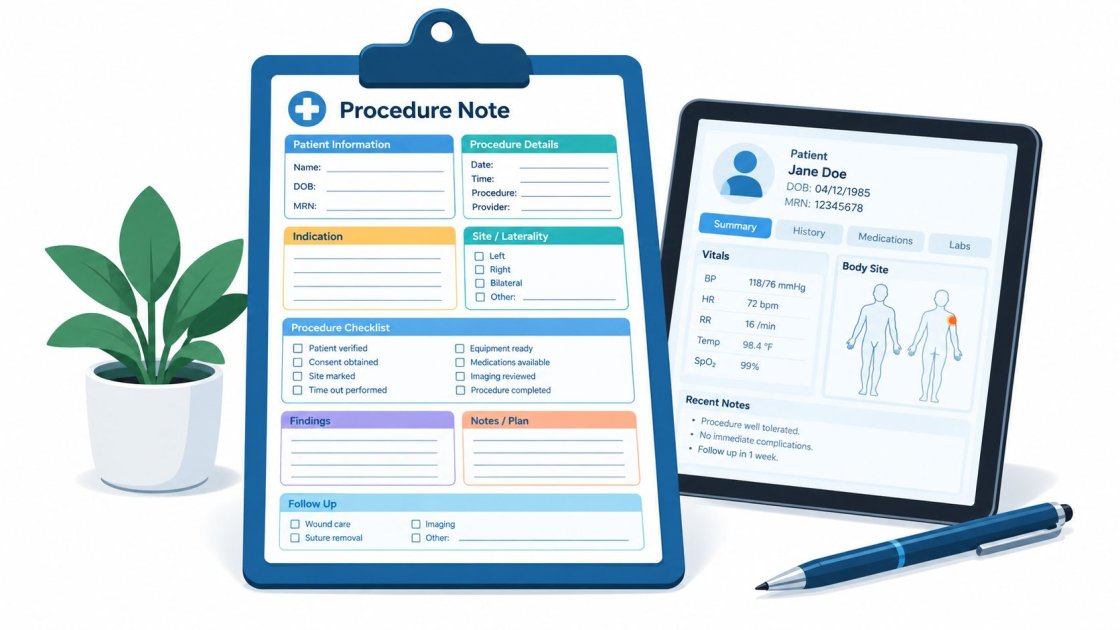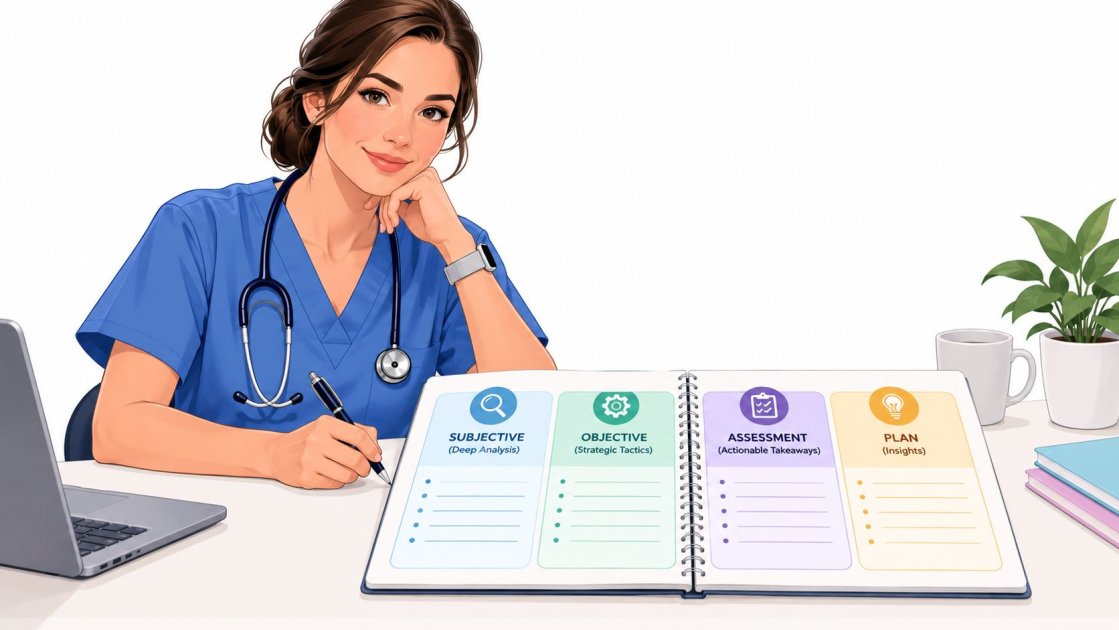
A useful SOAP note does more than record symptoms. It shows how the patient's story led to observed findings, clinical reasoning, treatment, education, and follow-up. That matters as nurse practitioner demand expands. The U.S. Bureau of Labor Statistics projects 40% employment growth for nurse practitioners from 2023 to 2033, creating more pressure for documentation that remains clear when care is busy and teams change. The seven examples below cover primary care, mental health, urgent care, women's health, rehabilitation, and dermatology. Each highlights specificity, medical decision-making context, measurable findings, continuity, and billing review. These are documentation models, not universal requirements. Clinical, coding, and legal decisions must be checked against current primary sources and local policy. For a quick self-assessment, clinicians can take the note-taking quiz.
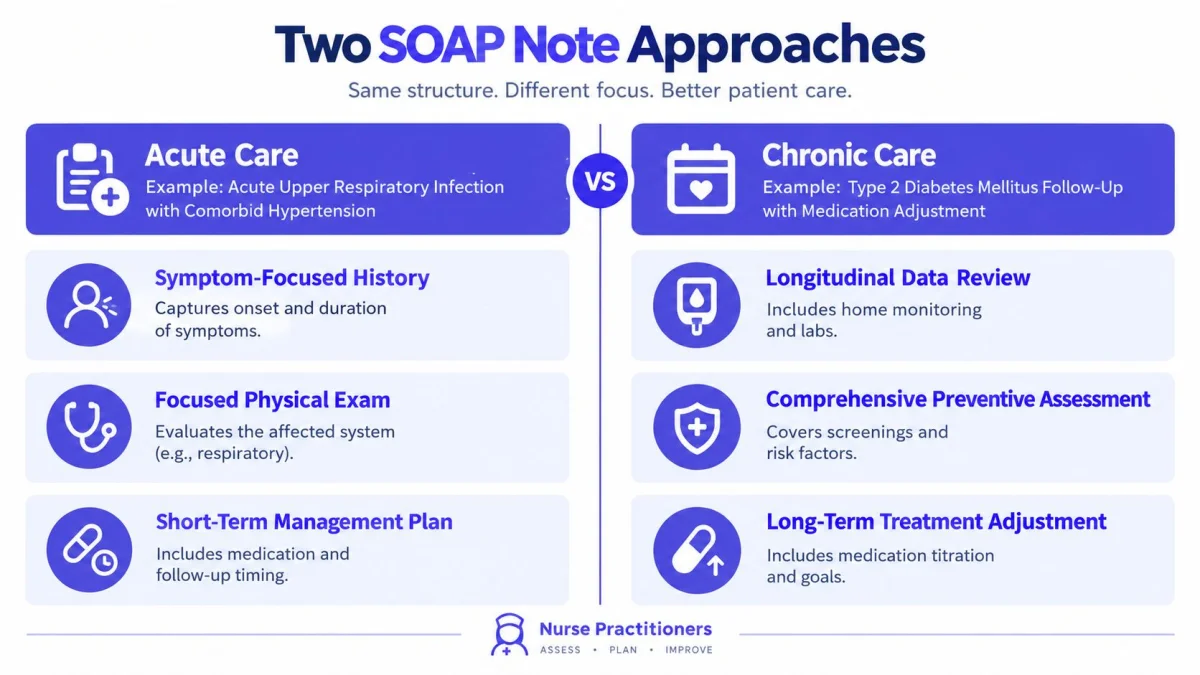
1. Acute Upper Respiratory Infection with Comorbid Hypertension
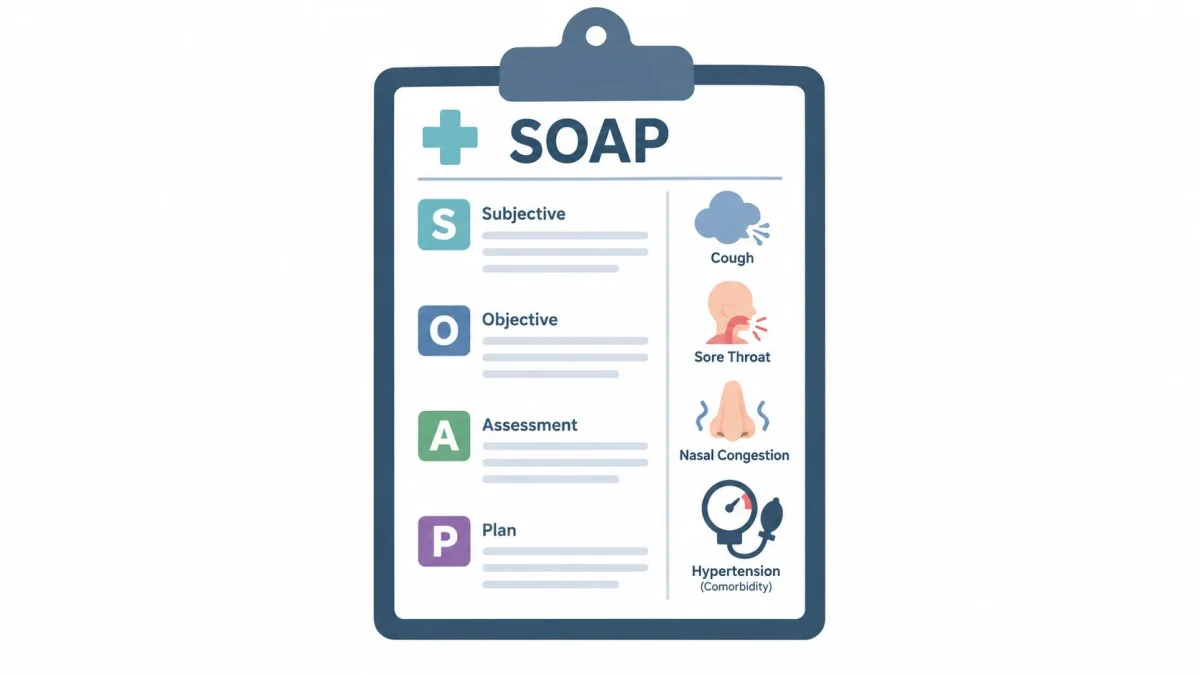
A 47-year-old woman presents with a four-day history of productive cough, sore throat, and nasal congestion. She reports that hypertension has remained controlled while taking lisinopril. A useful Subjective section would distinguish the cough's onset, sputum, severity, associated symptoms, sick contacts, medication use, allergies, and relevant negatives such as shortness of breath or chest pain.
The Objective section should make the respiratory examination reproducible. “Erythematous pharynx without exudate” is more useful than “inflamed throat.” Lung sounds, respiratory effort, oxygen saturation, temperature, blood pressure, and heart rate should be recorded when obtained. The chronic hypertension problem also deserves current blood pressure findings rather than a copied statement that it is controlled.
The Assessment can separate the acute respiratory presentation from the chronic condition. It should explain how the available history and examination support the working diagnosis, what alternatives remain relevant, and why the treatment approach is appropriate. The standard SOAP structure for nursing documentation places patient-reported information in Subjective, measured findings in Objective, interpretation in Assessment, and next steps in Plan.
Make the plan actionable
The Plan should document symptom management, medication review, patient education, and follow-up. If antibiotic treatment isn't selected, the rationale should be visible rather than implied. If another medication is recommended, the clinician should review allergies, existing medicines, and possible interactions.
- Education: Record advice about hydration, symptom management, medication use, and warning signs that require urgent assessment.
- Follow-up: State when improvement is expected and when the patient should contact the practice if symptoms persist or worsen.
- Chronic disease: Record whether lisinopril continues and whether blood pressure needs monitoring during the acute illness.
Practical rule: A diagnosis should not sit alone in the Assessment. The Plan should show what happens next for that diagnosis, who is responsible, and when the next decision will occur.
2. Type 2 Diabetes Mellitus Follow-Up with Medication Adjustment
A 62-year-old man with an eight-year history of type 2 diabetes returns with an A1C of 8.2% while taking metformin and lisinopril. He reports inconsistent home glucose monitoring. Foot examination shows calluses without ulceration, and an overdue eye examination requires referral.
This example works because the chronic disease assessment doesn't stop at the laboratory result. The Subjective section should capture adherence, home readings when available, dietary patterns, activity, hypoglycemia symptoms, adverse effects, cost or access barriers, and the patient's own treatment priorities. A high A1C may reflect medication tolerance, inconsistent monitoring, lifestyle barriers, or another issue. The note should preserve that context.
The Objective section can include the A1C, foot findings, relevant vital signs, medication list, and preventive-care information reviewed during the encounter. The Assessment should list diabetes control, medication response, foot status, and overdue screening as connected but distinct problems.
Pair each problem with a task
A strong Plan makes preventive care visible. It can record medication continuation or adjustment, the rationale for the decision, laboratory monitoring, foot-care education, eye-care referral, and a follow-up date. If a specific A1C target is used, the clinician should document why it fits the patient and what barriers are affecting progress rather than treating the target as automatic.
- Medication tolerance: Record gastrointestinal symptoms, adherence, contraindications considered, and the patient's response to current therapy.
- Behavioral goal: Choose a specific, achievable change, such as improving glucose logging or changing one meal pattern, and document patient agreement.
- Referral task: State that the eye examination is overdue, identify the referral or order, and record how completion will be tracked.
- Billing context: If insurance requires medical-necessity information for a proposed therapy, place that information in the clinical narrative and review any code suggestion before submission.
The nurse-practitioner guidance on SOAP note structure emphasizes that the Subjective section may include history, medicines, allergies, social and family history, health maintenance, and review of systems. A template is useful only when it prompts the clinician to address the elements that directly affect this patient's care.
3. Mental Health Intake for Depression and Anxiety Screening
A 28-year-old woman reports six weeks of depressed mood, anhedonia, and insomnia. She also describes increased worry about job performance. She denies suicidal ideation and identifies a supportive partner and employment as protective factors. She has no previous psychiatric treatment, drinks alcohol three to four days per week, takes no psychiatric medication, and has a PHQ-9 score of 16.
Mental health documentation needs more than a symptom list. The Subjective section should preserve the patient's account of mood, sleep, functioning, substance use, treatment history, psychosocial stressors, trauma history when clinically relevant, and treatment preferences. The Objective section may include appearance, behavior, speech, affect, thought process, cognition, insight, judgment, and screening results.
The Assessment should distinguish a diagnostic impression from a confirmed diagnosis when evaluation is still developing. It should also state the current risk assessment and the reasoning behind it. “Denies suicidal ideation” alone is weaker than documentation that addresses ideation, plan, intent, access to means when relevant, protective factors, and the clinician's disposition.
The PHQ-9 depression scale calculator can help organize a score, but it doesn't replace the interview or clinical judgment.
Turn risk assessment into a plan
The Plan should reflect the patient's readiness and preferences. Options may include psychotherapy, medication discussion, both, further assessment, substance-use counseling, or follow-up monitoring. A safety plan should identify warning signs, internal coping strategies, people or settings that provide distraction, and professional or emergency contacts appropriate to the patient's location and level of risk.
- Screening data: Record the instrument name, score, date, and relevant response pattern.
- Function: Document effects on work, relationships, sleep, self-care, and daily responsibilities.
- Safety: Use clear language for suicidal ideation, plan, intent, protective factors, and disposition.
- Continuity: Assign follow-up timing and identify what symptom or risk changes should trigger earlier contact.
4. Orthopedic Injury Assessment for an Ankle Sprain
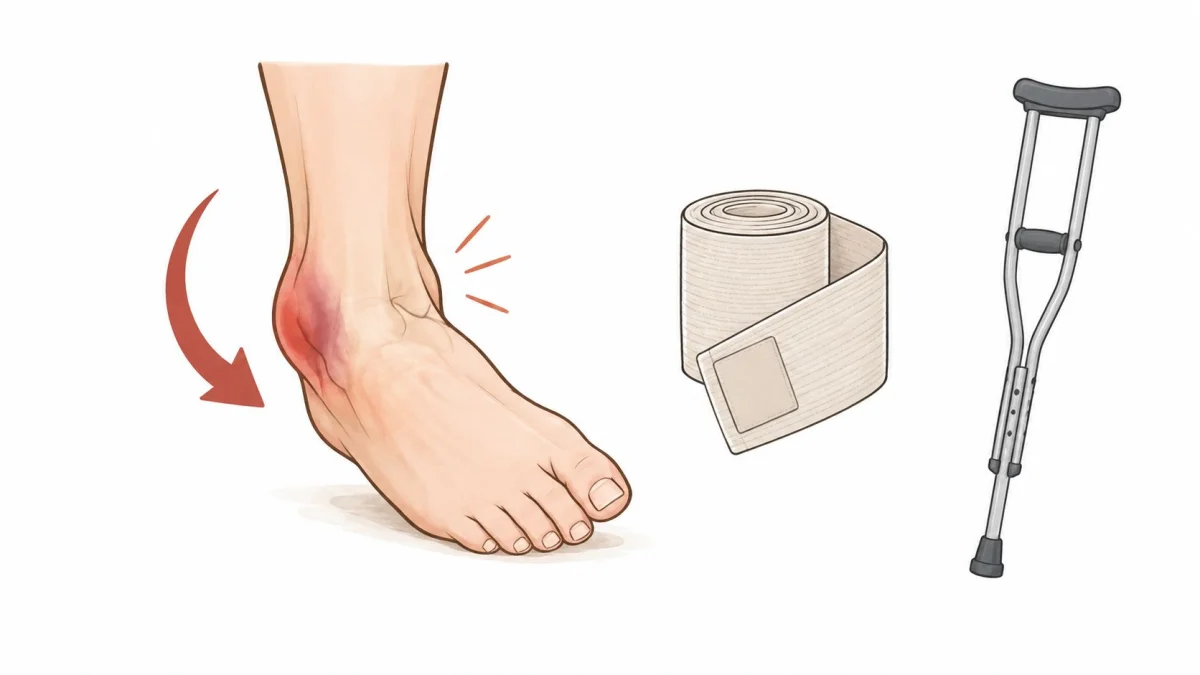
A 24-year-old soccer player sustains an inversion injury during a game three hours before evaluation. Immediate pain and inability to bear weight are reported. Examination shows lateral swelling and ecchymosis, with positive anterior drawer and inversion stress tests. X-ray is negative for fracture, and the working diagnosis is a grade 2 ankle sprain.
The note should begin with the patient's description of the mechanism, not a vague phrase such as “ankle injury.” “Inversion injury while stepping off a curb” gives the next clinician a clearer starting point. The Objective section should include swelling location, bruising, tenderness, range of motion, gait or weight-bearing ability, special-test results, imaging report, and neurovascular status.
The Assessment should connect the mechanism, examination, and imaging. A negative fracture result doesn't remove the need to document the report accurately. It also doesn't make the clinical assessment self-explanatory. The reasoning should show why the findings support the working diagnosis and what uncertainty remains.
Document function, not only treatment
The Plan can include elastic compression, ice, elevation, analgesia when clinically appropriate, gentle range-of-motion exercises, and physical therapy referral. The note should record the instructions given, the patient's understanding, activity restrictions, and criteria for reassessment. A proposed return to soccer in four to six weeks is a functional goal, not a guarantee, so progress should determine readiness.
- Neurovascular baseline: Record dorsalis pedis pulse, sensation, and capillary refill when assessed.
- Imaging: Reference the radiology report or documented result rather than relying only on a personal impression.
- Rehabilitation: State goals such as restoring proprioception and strengthening lateral ankle stabilizers.
- Follow-up: Specify what worsening symptoms, persistent inability to bear weight, or failure to progress should prompt reassessment.
The SOAP note guidance for nurse practitioners recommends checking that each assessment is supported by Subjective or Objective evidence and that each problem has a corresponding Plan entry. That linkage makes an injury note more useful to the patient, therapist, insurer, and covering clinician.
5. Obstetric Prenatal Visit for Routine Second-Trimester Screening
At 20 weeks, a 29-year-old G2P1 patient reports good maternal health, normal energy, and no vaginal bleeding. Her blood pressure is 118/76, weight gain is appropriate, fundal height is 20 cm, and fetal heart tones are 155 beats per minute. First-trimester combined screening was low risk, urinalysis is normal, and hemoglobin is 11.8 g/dL.
The note should make the clinician's reasoning visible. Subjective documentation includes current symptoms, concerns, medications and supplements, psychosocial context, and questions raised during the visit. Objective findings should locate pregnancy dating, examination results, screening history, and laboratory data without requiring a reader to search through free text.
A checklist can reduce omissions, but it also creates a documentation risk. Normal findings should be recorded only when assessed, and unchecked items should not appear as if they were reviewed.
Use the Assessment to state the pregnancy status and identify active concerns. In the Plan, document that the anatomy ultrasound is scheduled for the following week and that glucose-tolerance testing is planned at 24 to 28 weeks. Anticipatory guidance should specify warning signs and how the patient should contact the maternity team.
Keep screening and communication visible
If domestic-violence screening is performed, record the result, including a negative result. The record should also capture education provided, questions answered, planned tests, and who is responsible for each follow-up task.
Screening review: Summarize first-trimester results, current laboratory findings, and completed risk assessments.
Upcoming care: State the ultrasound date and the planned glucose-testing window.
Safety guidance: Record the warning signs discussed and the appropriate contact route.
Patient priorities: Document concerns requiring follow-up instead of leaving them in an undocumented conversation.
A specialty template can support consistency when it matches the practice's actual workflow. The PatientNotes OB/GYN specialty templates illustrate a configurable structure. The clinician must still verify every entry, assess whether screening decisions fit the patient, and adapt the plan when findings or preferences change. A template organizes evidence and tasks. It does not replace clinical judgment.
6. Physical Therapy Initial Evaluation for Knee Pain
A physical therapy SOAP note should make both the impairment and its effect on function visible. A 52-year-old woman reports right medial knee pain for three weeks after stepping off a curb. She works as a nurse and spends prolonged periods standing and walking. Pain is 6/10. Right knee range of motion is 0 to 100 degrees, compared with a stated normal range of 0 to 135 degrees. Right quadriceps strength is 4/5 versus 5/5 on the left, gait is antalgic, and Lachman and drawer tests are negative.
Begin with the patient's experience, then connect it to reproducible findings. The Subjective section should describe effects on work, stairs, walking, sleep, and daily tasks. The Objective section should name how each finding was obtained, including goniometric range-of-motion measurement, manual muscle testing, gait observation, side-to-side comparison, and special tests. These details support clinical reasoning and billing-relevant documentation without presenting a template as a substitute for therapist judgment.
The Assessment should interpret the findings as a functional problem list. Limited flexion, reduced quadriceps strength, antalgic gait, and difficulty with work activities are more informative than stating that the knee is weak. If imaging is requested to evaluate possible meniscal injury, document the clinical question and any referral or communication. The note should show why that next step is being considered.
Make progress auditable
Set the Plan with the patient's treatment approach and functional goals. Returning to work without pain and climbing stairs without a rail are meaningful outcomes. Pair each goal with a measurement method and review point so follow-up shows whether function is changing.
- Measurement method: Repeat range-of-motion and strength testing with the same methods.
- Comparison: Record the unaffected side to show the functional difference.
- Reproducibility: Name each special test performed and document its result.
- Escalation: Record progressive swelling, instability, or severe limitation that warrants medical referral.
- Rehabilitation potential: State the factors supporting or limiting expected progress.
The physical therapy SOAP note examples show how a general SOAP format can be adapted for function-focused rehabilitation. Use a template to organize measurements, tasks, and patient goals. The therapist still interprets the findings and adjusts care when the response or clinical picture changes.
7. Dermatology Lesion Assessment with Dermoscopy Documentation
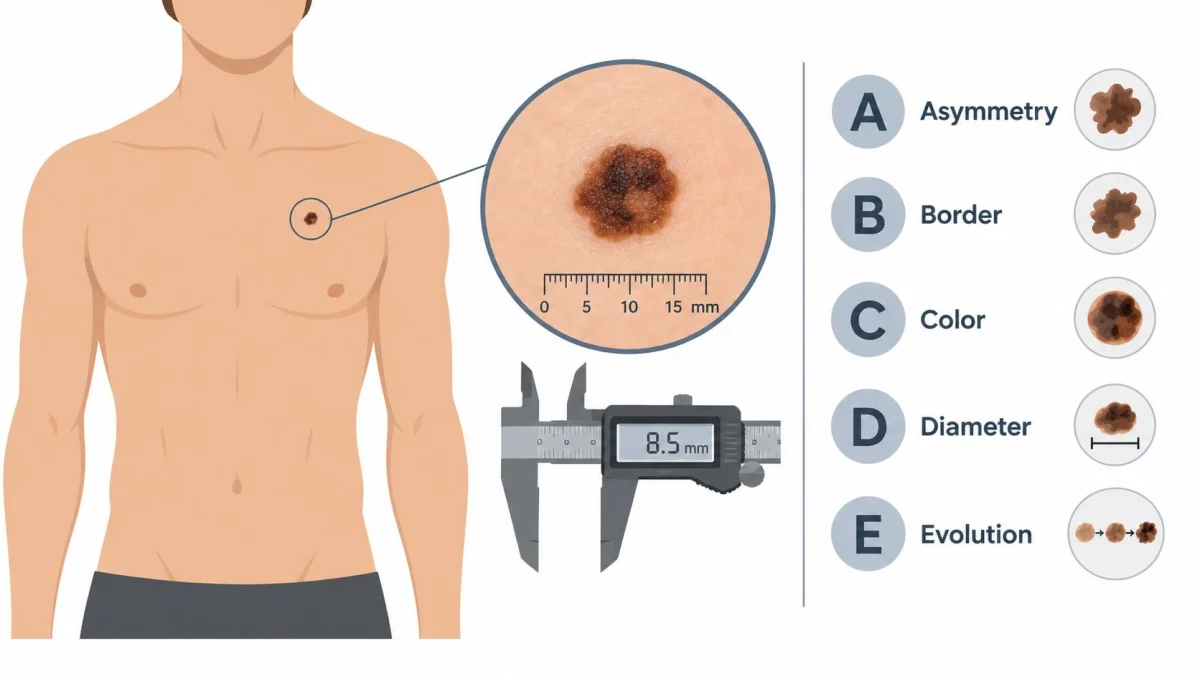
A lesion note should make the clinician's reasoning visible and the next action easy to audit. A 45-year-old man reports a new pigmented lesion on his back that has darkened gradually over four months. He has a fair complexion, multiple nevi, and a history of sunburns. The lesion measures 8 by 7 millimeters, is asymmetric, has an irregular border and tan, brown, and dark-brown colour variation, and shows an atypical network pattern on dermoscopy.
Document the history and examination so another clinician can locate and reassess the lesion. Subjective findings include onset, evolution, bleeding, itching, pain, prior lesions, sun exposure, and relevant personal or family history. Objective documentation should identify the location on a body map, dimensions, morphology, dermoscopic findings, photography, and the wider skin examination.
The Assessment should state the level of concern and differential diagnosis in specific terms. Here, the lesion is assessed as moderately atypical, with excisional biopsy recommended with 2-millimeter margins. The Plan records consent for baseline polarized photography, the biopsy recommendation, pathology communication, wound or procedure instructions, and follow-up. The template organizes these decisions. It does not replace clinical judgment about urgency, differential diagnosis, or the appropriate procedure.
Make the reasoning reproducible
Use the ABCDE framework as a documentation aid. Record asymmetry, border, colour variation, diameter, and evolution as separate observations rather than compressing them into a general statement. Include dermoscopic terminology only when the clinician has the training to interpret those findings.
Measurement: Use a calibrated scale or dermoscopy tool and record dimensions in millimeters.
Photography: Document consent and explain that the image provides a baseline for comparison.
Pathology: State the clinical concern and the question for pathology when sending a specimen.
Return precautions: Explain which changes, including bleeding, rapid growth, or severe itching, should prompt earlier evaluation.
Continuity: Assign responsibility for follow-up and specify how pathology results will reach the patient.
The color-coded SOAP note teaching example shows how information can connect across the HPI, review of systems, examination, Assessment, and Plan. In dermatology, that connection links the patient's observation to the lesion map, dermoscopy, clinical concern, biopsy decision, and follow-up task.
7-Case SOAP Note Comparison for Nurse Practitioners
| Title | Implementation complexity | Resource requirements | Expected outcomes | Ideal use cases | Key advantages |
|---|---|---|---|---|---|
| Acute Upper Respiratory Infection with Comorbid Hypertension | Low–Moderate, focused acute assessment plus chronic vitals review | Basic vitals, focused respiratory exam, medication list, brief counseling time | Symptom relief, judicious antibiotic use, continued BP monitoring | Primary care, urgent care, NP training visits | Concise template for common complaints; integrates acute and chronic care |
| Type 2 Diabetes Mellitus Follow-Up with Medication Adjustment | Moderate–High, longitudinal review and medication titration | Recent labs (A1C, lipids, UA), home glucose data, care coordination, time for counseling | Improved glycemic control, preventive screening completion, documented med changes | Primary care, endocrinology, chronic disease management clinics | Comprehensive preventive documentation; supports justification for therapy changes |
| Mental Health Intake: Depression and Anxiety Screening | High, detailed history, risk assessment, and safety planning | Screening tools (PHQ‑9, GAD‑7, C‑SSRS), private setting, trained clinician, extended visit time | Diagnostic impression, safety plan, initial treatment or referral | Psychiatry, integrated behavioral health, mental health clinics | Systematic capture of safety info and baseline for treatment response |
| Orthopedic Injury Assessment: Ankle Sprain with Physical Examination Findings | Moderate, hands‑on exam with special tests and possible imaging | Orthopedic exam skills, access to X‑ray/MRI, immobilization supplies, referral pathways | Injury grading, treatment plan, PT referral, return‑to‑activity guidance | Urgent care, sports medicine, orthopedics | Objective exam findings for PT planning, insurance/work comp support |
| Obstetric Prenatal Visit: Routine Second‑Trimester Screening | Moderate, multiple screening steps and coordination with imaging/labs | Fetal heart monitoring, ultrasound/lab results, screening tools, visit checklist | Longitudinal maternal‑fetal record, risk stratification, scheduled follow‑ups | OB/GYN, midwifery, prenatal clinics | Ensures evidence‑based screening at a critical gestational timepoint |
| Physical Therapy Initial Evaluation: Knee Pain with ROM and Strength Assessment | Moderate–High, detailed measurements and goal setting | Goniometer, MMT tools, gait/functional tests, time for objective measures | Quantified baseline, SMART functional goals, documentation for authorization | Outpatient PT, rehab clinics | Objective metrics for progress tracking and insurance justification |
| Dermatology Lesion Assessment: Pigmented Nevus Evaluation with Dermoscopy Documentation | High, specialized visual assessment and procedural planning | Dermatoscope, clinical/dermoscopic photography, pathology access, dermatology training | Risk stratification, biopsy/excision decision, baseline images for follow‑up | Dermatology clinics, skin cancer screening services | Structured ABCDE/dermoscopy documentation supporting early detection and biopsy rationale |
Turn Examples Into a Safer Documentation Workflow
A reliable review sequence starts with the patient's words and the actual findings. Confirm that the Subjective section reflects what the patient reported, that the Objective section contains only information observed or measured during the encounter, and that copied material has been checked for currency. The SOAP framework described in nurse-practitioner education developed from problem-oriented medical recordkeeping and is designed to organize history, examination, assessment, and plan in a repeatable sequence.
Next, connect every assessment to supporting evidence. A diagnosis should be traceable to relevant Subjective or Objective data, and each problem should have a corresponding Plan entry. For complex encounters, a brief explanation of the differential, treatment choice, referral, testing decision, or decision not to prescribe can help another clinician understand the medical decision-making context.
The Plan should then be tested for actionability:
- Patient education: What was explained, and did the patient receive instructions in a usable form?
- Follow-up: When will review occur, and what should prompt earlier contact?
- Tasks: Who will complete the referral, test, prescription, or result review?
- Continuity: Could a covering clinician understand the next step without reconstructing the visit?
- Coding review: Do suggested codes match the documented service and applicable billing rules?
Coding tools can assist with review, but they don't make the coding decision. PatientNotes provides ICD-10, CPT, and CDT code suggestions for US billing only, and clinicians must verify those suggestions before submission against current CMS guidance, payer rules, professional requirements, and local policy. The same principle applies to clinical and legal documentation decisions. For privacy and vendor arrangements, HHS guidance on business associate contracts says a covered entity using a business associate needs a written agreement that defines permitted uses, disclosures, and safeguards. HHS also addresses breach reporting and subcontractor protections in its sample business associate agreement provisions.
PatientNotes is an optional workflow aid for individual clinicians and small practices. It offers SOAP and specialty templates across 37 specialties, an AI template builder, ambient recording on the web and a native iOS app with offline recording, and notes and tasks in the clinician's own language. It integrates natively with Semble. Every other EHR works by copy and paste. It doesn't offer a Chrome extension and isn't built for health systems that need deep Epic integration.
The service costs $70 per user per month when billed monthly, or $50 per user per month when billed annually. It includes a 7-day free trial with no credit card, a 14-day money-back guarantee, HIPAA compliance with a BAA included at no extra cost, and no enterprise tier or sales call. Clinicians can review supported templates on the PatientNotes specialties page and check current plan details on the PatientNotes pricing page, since product terms may change.
PatientNotes can turn a consultation recording into a draft SOAP note, extract follow-up tasks, produce notes in the clinician's language, and support specialty templates for the examples covered here. Clinicians who want to test that workflow can visit PatientNotes, use the 7-day trial without a credit card, and review every draft before it enters the EHR.