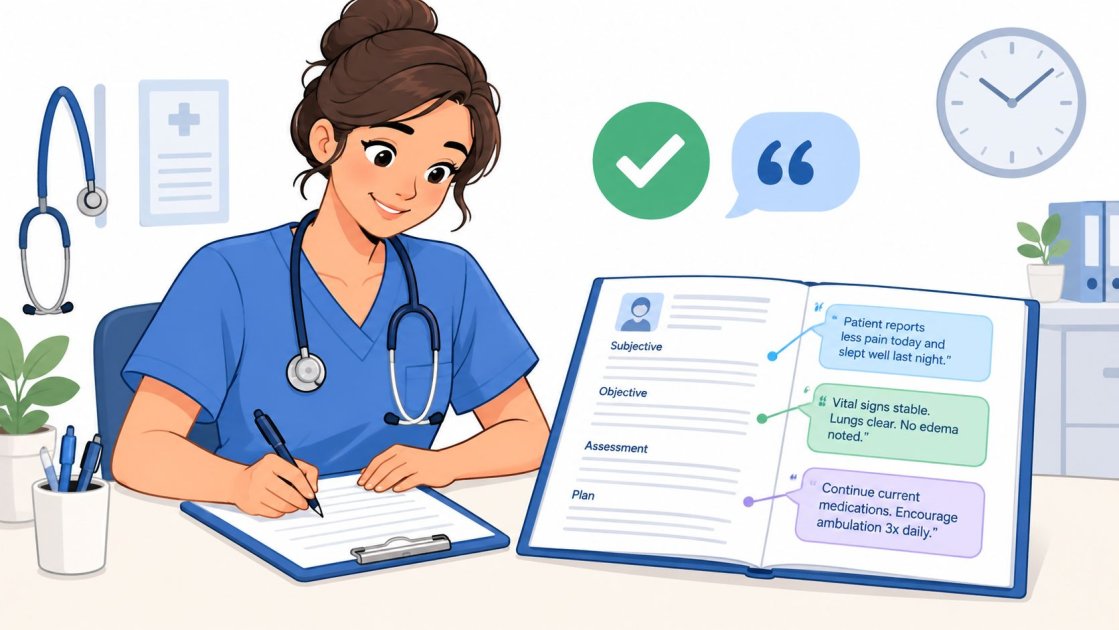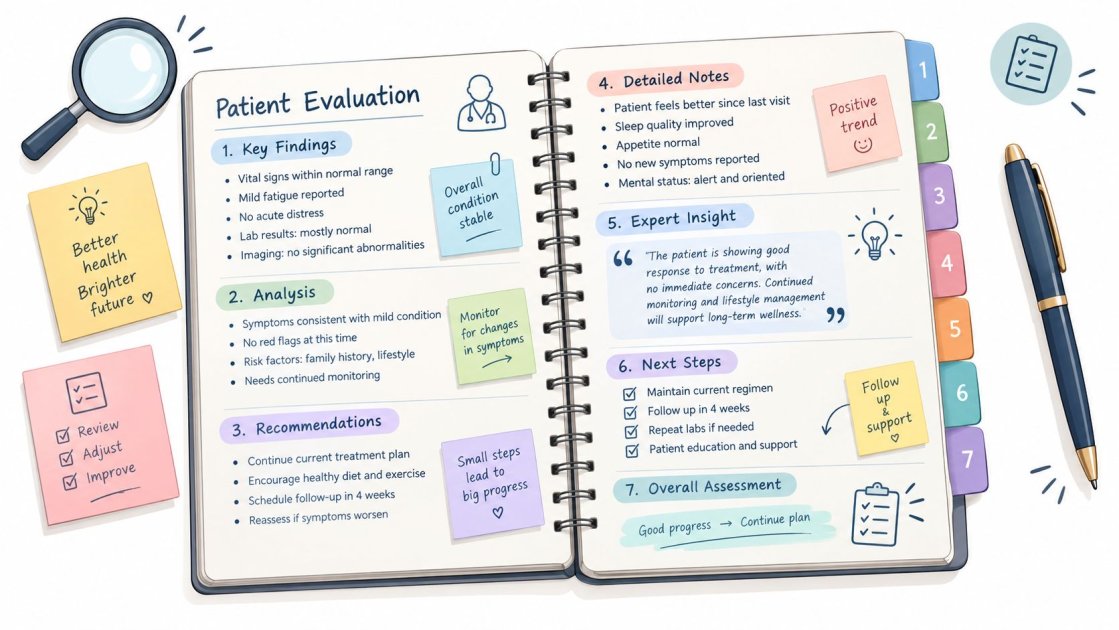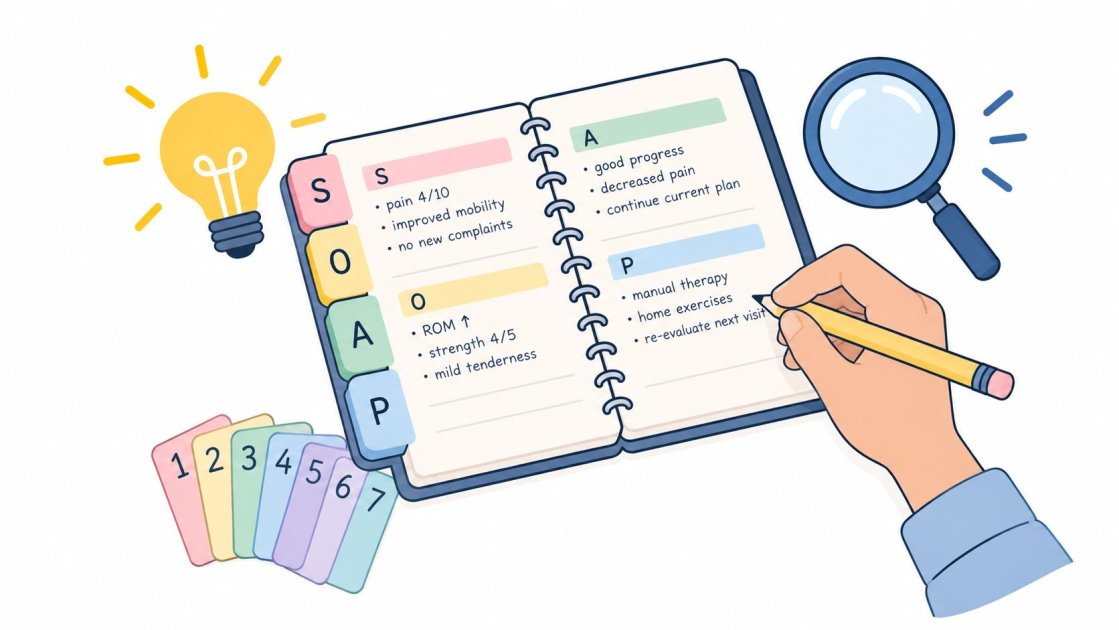
The strongest PT SOAP notes tie symptoms, measurable findings, functional limits, assessment, and a specific plan into one record. In health-system documentation, structured formats have been used to improve efficiency and satisfaction, and SOAP-style notes remain a standard way to support continuity of care and clinical reasoning (NCBI Bookshelf, AJMC health-system documentation study).
A note can list exercises and still fail to show why skilled care is needed. The examples below are training references, not clinical, coding, or legal guidance. They show how pt soap notes examples change by setting, from acute injury through telehealth, while keeping the same core logic, patient report, objective data, assessment, and a plan tied to the next decision.
What Strong PT SOAP Notes Make Clear
A useful SOAP note does more than record attendance. It explains what the patient said, what the therapist measured, what changed, and what happens next. That matters because a written record should support continuity of care, make progress visible over time, and show why the plan stays, changes, or ends.
The four headings keep that structure visible. Subjective captures the patient's report in plain language. Objective holds repeatable findings like range of motion, swelling, gait, balance, strength, or test performance. Assessment turns those findings into clinical reasoning, and Plan states the next step in specific terms, not vague filler.
Practical rule: a good PT note should let another clinician understand the case without guessing what changed or why the plan stayed the same.
That is especially important in settings where documentation quality affects workflow and audit risk. A structured note format can make charting easier to read and faster to review, and the health-system implementation study cited earlier reported high satisfaction with structured note use (AJMC health-system documentation study). PT teams also face a growing payer burden around documentation, so notes need to be defensible, not just complete (APTA administrative-burden report).
The seven examples below move from acute injury to telehealth. Each one shows a different documentation challenge, and each one uses the same core habit, measurable facts tied to function.
1. Acute Ankle Sprain SOAP Note
An acute ankle sprain note has to prove more than pain. It should show tissue tolerance, swelling, weight-bearing status, gait quality, and the first decision about protection versus motion. In the first 48 to 72 hours, that means the note should read like a snapshot of the injury and the starting point for recovery.
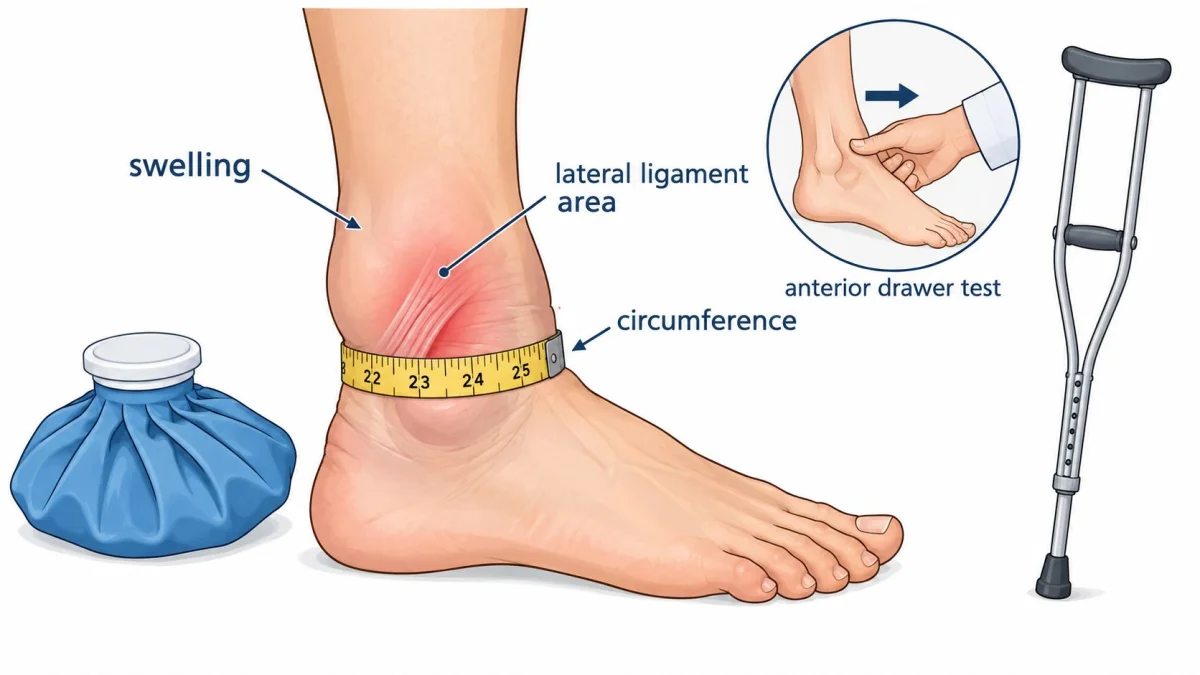
A strong version of this note might describe a patient two days after an inversion injury with visible swelling, limited plantarflexion, and inability to bear weight independently. The objective section should name the test results and the exact movement limits, because that gives the next clinician a baseline. If the note also records pain during walking, stairs, or standing, the functional impact becomes clearer than a rest pain score alone.
The first note after an injury should make the timeline obvious, because early baseline data is what later progress gets compared against.
A practical template for this scenario usually includes these details:
- Swelling measurement: Use a consistent circumference measure around the malleoli so later sessions can compare the same landmark.
- Gait status: Record whether the patient is non-weight-bearing, hopping, using crutches, or bearing weight with compensation.
- Functional pain: Note pain with walking, turning, or stair use, not just pain at rest.
- Neurovascular status: Document sensation, circulation, and any red flags immediately.
The Ottawa ankle rules tool is relevant here as a screening aid for decision-making, but the note itself still needs the therapist's own findings and judgment. A clean assessment can justify progression from protected non-weight-bearing to partial weight-bearing if swelling, pain, and gait are improving.
What works in the assessment
The assessment should connect the signs of ligament injury to function. Saying the ankle is “getting better” is weak. Saying the patient now tolerates short distance walking with a crutch and has less swelling than the first visit is stronger, because it shows the treatment is changing what the patient can do.
2. Chronic Lower Back Pain Progress Note
A chronic low back pain note has a different problem. The challenge is not identifying an injury, it is showing incremental change across visits when improvement is slow. That means the record has to separate pain relief from functional gains, because a patient can hurt less and still not work, sleep, or sit better.
Consistency matters here. If one visit uses an outcome scale and the next skips it, the trend gets muddy. A better note repeats the same tool, the same movement tests, and the same activity context, so progress is visible over time. The point is not to make the note longer, but to make the pattern easier to defend.
The subjective section can capture changes in morning stiffness, sleep disruption, and tolerance for desk work or driving. The objective section should pair that report with repeatable measures, such as straight leg raise, trunk control, or posture under load. The assessment then explains whether the pattern looks like gradual improvement, flare control, or plateau.
Practical rule: pain scores alone rarely tell the story. Function, tolerance, and adherence make the note more defensible.
A useful chronic pain note often balances three elements:
- Pain pattern: Frequency, triggers, and duration of stiffness or flare-ups.
- Activity tolerance: Time sitting, standing, driving, or working before symptoms rise.
- Home program compliance: Whether the patient is doing the exercises, and what still blocks consistency.
The internal link for this scenario is useful for documentation workflow context, not for clinical guidance, and belongs in the note review process itself, progress note templates. The best assessment language stays specific, for example, the patient is tolerating more desk work, flexion tolerance is improving, and symptoms are less frequent with continued exercise adherence.
That kind of language helps continuity of care because it shows why treatment continues and what the next target is. It also helps billing review because it describes progress rather than repeating the same generic phrase each week.
3. Post-Surgical Rehabilitation SOAP Note
Post-operative rehab notes need more discipline than most other PT notes. The therapist has to show that the work fits the surgical timeline, respects the protocol, and protects the repair while moving function forward. That means the note should always anchor itself to the procedure type and the relative date after surgery.
A good example might be an ACL reconstruction visit on post-op day 14 with limited knee flexion, mild swelling, and basic quadriceps work performed within the protocol. Another could be a rotator cuff repair in week 8 with improving range and the start of light strengthening after surgeon clearance. In both cases, the note is strongest when it explains why the intensity is what it is.
This is also where patient education matters. The chart should show that the patient understands why a restriction exists, not only that the restriction was mentioned. That makes compliance easier to track and reduces the chance of looking like the therapist is repeating a protocol without judgment.
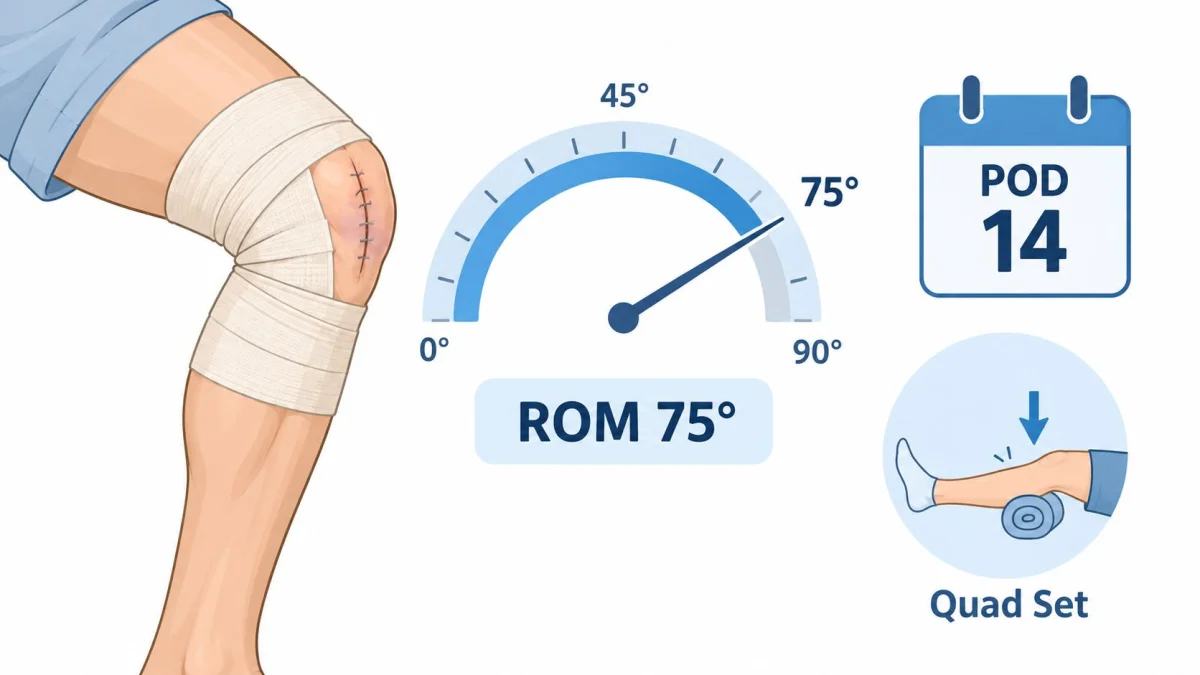
A strong surgical note usually includes:
- Procedure and date relative to surgery: Use post-op day or week instead of only calendar dates.
- Protocol reference: State that the exercise selection follows the orthopedic protocol for that procedure.
- Precaution status: Note weight-bearing status, ROM limits, and any activity restrictions.
- Communication: If progression goes beyond the usual protocol, document surgeon contact or clearance.
The support article on recovering from surgery at home can help frame patient education ideas, safe space prep after surgery. Still, the note itself has to stay grounded in the patient's response, swelling, movement quality, and compliance.
A useful assessment in this setting avoids vague praise. “Doing well” is weak. “ROM is within the current phase of protocol, swelling is mild, and quad activation is improving with no compensation noted” gives the next clinician a reason to continue, progress, or hold.
Why protocol language matters
Post-op notes are most defensible when the plan sounds specific. A phrase like “continue therapy” says little. A phrase like “advance knee flexion as tolerated within protocol, monitor swelling, and reassess quadriceps control next visit” shows clinical reasoning.
4. Neurological SOAP Note for Stroke Rehabilitation
Stroke rehab notes need precision because the gains are often modest, but clinically meaningful. The chart has to show asymmetry, motor recovery, balance, safety, and the difference between what the patient can do with assistance versus independently. That makes standardized neurological measures especially useful.
A week-6 post-stroke note might describe improved lower-extremity motor control, emerging ankle dorsiflexion against gravity, and better gait velocity. It might also note spasticity in the fingers, reduced balance, and need for contact guard during transfers and walking. The value is not in making the patient sound dramatic, it is in showing the exact shift in function.
The assessment should compare affected and unaffected sides clearly. It should also distinguish spontaneous recovery from compensation. A patient may move faster by leaning or overusing the stronger side, and the note should say so if it matters to safety or goal setting. Family training belongs in the plan because stroke care often depends on what happens at home between visits.
APTA's documentation guidance on visit elements is especially relevant here because objective documentation can include more than basic ROM or strength. It can include treatment response and other measurable markers that support clinical reasoning. That broader view helps when the patient's gains are real but small.
Safety belongs in the first line of the assessment when a fall risk is present.
A strong stroke note should also document maintenance goals when progress slows. If a patient plateaus, that does not automatically make therapy irrelevant. Maintaining transfers, gait safety, and caregiver readiness can still be a valid plan when recovery is incomplete.
The best documentation in this scenario reads like a risk-managed story of recovery. It shows where the patient started, what improved, what remains unsafe, and what the next decision must address.
5. Orthopedic Pre-Hab and Post-Op Comparison SOAP Note
A pre-op and post-op comparison note gives context that a single visit can't provide. It shows whether prehabilitation helped the patient enter surgery stronger, steadier, or better prepared, and it helps explain early post-op findings that might otherwise look discouraging. This format is useful in value-based care because it ties preparation to recovery trajectory.
The key is consistency. The therapist needs to measure the same thing the same way before and after surgery. If quadriceps strength was tested in a particular position pre-op, the post-op test should match that method as closely as possible. Otherwise, the comparison looks cleaner than it really is.
A useful note might say pre-op quadriceps strength was 4/5 and post-op strength is lower at week 4, but activation appears better than expected for the phase because the patient completed pre-hab. Another example might show ankle dorsiflexion improving more quickly than historical expectations because the patient entered surgery with good baseline mobility. The point is not to promise faster healing, but to document the bridge between two phases of care.
The assessment should clearly separate surgical trauma from lost conditioning. That helps the reader understand that a short-term decline is expected, while still recognizing the value of the earlier work. A note like that can also support future goal setting because it connects recovery with baseline function documented before the procedure.
The strongest comparison notes usually include:
- Pre-op baseline: Strength, ROM, balance, or function documented before surgery.
- Same test methods: Matching position, resistance, or test setup across visits.
- Pre-hab participation: Attendance, adherence, and exercises performed before surgery.
- Goal continuity: The same functional goal appears on both sides of the surgical episode.
If the practice keeps a template library, this kind of comparison note is a good candidate for a specialty template rather than a generic free-text visit. A structured template helps the therapist keep the pre-op and post-op story aligned, which is the whole value of the format.
6. Sports Medicine Return-to-Play SOAP Note
Return-to-play notes have to bridge rehab and performance. That means they need more than strength numbers, because sport demands agility, deceleration, confidence, and tolerance under fatigue. A note that only says “feels better” leaves too much open.
A solid ACL return-to-soccer note may use hop testing, limb symmetry, agility work, and a confidence rating with cutting and deceleration. An ankle sprain return-to-basketball note may show shuttle performance, jump recovery, and the ability to complete a practice segment without symptom flare. The assessment then answers one question, is the athlete physically and psychologically ready for the next sport demand?
The subjective section should include the athlete's own confidence, fear, or hesitation. That is not soft data, it is part of readiness. The objective section should capture the validated sport test, the movement quality, and the symptom response after exertion. The plan should define the progression, whether that is limited practice, controlled drills, or full participation with monitoring.
Return-to-play should read like a decision note, not a praise note.
A practical sports note often tracks:
- Test performance: Hops, balance, shuttle work, or jump output.
- Symptom response: Pain, swelling, or soreness after practice.
- Confidence: The athlete's readiness for cutting, sprinting, or contact.
- Communication: What the coach, athlete, or athletic trainer needs to know next.
The included video can help illustrate how outcome tracking can be organized across recovery phases, outcome tracking overview. The stronger note, though, is the one that makes the clearance logic visible without overselling it.
This type of documentation matters because athletes often feel ready before the body is truly ready, or the reverse. The note should settle that question with measurements, not optimism.
7. Telehealth Physical Therapy SOAP Note
Telehealth PT notes are strongest when they are explicit about what was seen on video and what was only reported by the patient. That distinction matters because remote care limits hands-on testing. The therapist needs to document the home setup, the quality of movement shown on camera, and when an in-person visit is still necessary.
A post-op ACL follow-up by video might show quad sets, a straight leg raise, and reduced swelling by report, while also noting that detailed effusion measurement will wait for the next in-person visit. A chronic pain session might show better posture at a desk setup, improved exercise form, and reduced daily pain on the patient's own scale. In both cases, the note should show what can be verified remotely and what still needs a clinic visit.
The telehealth-specific internal resource belongs in this note because it speaks to remote documentation structure, telehealth documentation guidance. The therapist still has to note privacy, location, technology issues, and whether the patient could demonstrate the movement from more than one angle. That protects the quality of the visit record and helps the next clinician understand the limits of the session.
A good telehealth note usually includes:
- Observed on video: Movements, posture, exercise form, or functional tasks that were directly seen.
- Patient-reported measures: Pain, swelling, stiffness, sleep, or home tolerance.
- Environmental factors: Space, equipment, signal quality, or privacy limits.
- Next in-person trigger: The specific measurement that requires hands-on follow-up.
The note should not pretend that video can replace every examination element. It should show where telehealth works well, and where it reaches its limit. That honesty makes the note more useful, not less.
Comparison of 7 PT SOAP Note Examples
| Note Type | Implementation Complexity | Resource Requirements | Expected Outcomes | Ideal Use Cases | Key Advantages |
|---|---|---|---|---|---|
| Acute Ankle Sprain SOAP Note | Medium, requires orthopedic special tests and precise early measurements | Basic clinic tools (goniometer, tape), clinician skilled in special tests | Establishes objective baseline, justifies early care, guides weight-bearing progression | Initial 48–72 hr assessment of ankle sprain | Objective swelling/ROM data, insurance support, tracks early progress |
| Chronic Lower Back Pain Progress Note | Medium, serial assessments and standardized scales over time | Outcome questionnaires (Oswestry/LEFS), consistent testing methods, clinician time | Documents incremental functional gains and medical necessity for continued care | Ongoing chronic LBP management with 2–4 week follow-ups | Standardized outcomes, shows long-term improvement, supports authorization |
| Post-Surgical Rehabilitation SOAP Note | High, phase-specific protocols and close coordination with surgeons | Knowledge of procedure protocols, frequent ROM/swelling measures, surgeon communication | Structured, time-sensitive progression that protects repair and justifies intensity | Post-op rehab (ACL, TKR, rotator cuff) across healing phases | Phase-based documentation, protects patient/clinician, strong insurance rationale |
| Neurological SOAP Note for Stroke Rehabilitation | High, specialized neuro exam skills and standardized neuro scales | Trained clinicians, Fugl‑Meyer/Ashworth/Berg tools, more assessment time | Objective evidence of neurological recovery, safety and functional tracking | Stroke recovery and neuro deficits monitoring | Detects subtle motor gains, bilateral comparison, recognized standardized scales |
| Orthopedic Pre-Hab and Post-Op Comparison SOAP Note | Medium–High, requires matched pre- and post-op measurement protocols | Pre-op baseline visits, consistent testing methods, added documentation effort | Demonstrates value of pre-hab and recovery trajectory vs baseline | Patients undergoing surgery who receive pre-hab conditioning | Shows pre-op benefit, motivates compliance, outcome-focused evidence for value-based care |
| Sports Medicine Return-to-Play SOAP Note | High, sport-specific, performance-based and psychological assessments | Performance testing equipment/space, baseline/normative data, sport expertise | Objective readiness for sport, liability protection, clear RTP criteria | Athletes returning to sport after injury/surgery | Sport-specific metrics, limb symmetry indices, clear clearance criteria |
| Telehealth Physical Therapy SOAP Note | Medium, adapts assessments for remote observation and documentation | Telehealth platform, patient technology, camera setups, clinician cueing skills | Expands access, documents home-environment function, interim monitoring between visits | Follow-ups, access-limited patients, interim care between in‑person visits | Increases access, assesses home context, convenient; limited hands‑on assessment |
Turn Each Example Into a Reliable Note
The most dependable PT SOAP notes follow the same sequence every time. Start with the patient's functional report, add repeatable objective measures, interpret the change in the assessment, and make the plan specific to progression, precautions, education, follow-up, and communication. That structure helps continuity of care because the next clinician can see what changed and why the plan moved forward.
The examples above also show a bigger point. Different settings need different emphasis. Acute injury needs baseline protection and objective swelling or gait data. Chronic pain needs consistent outcome measures and activity tolerance. Post-op rehab needs protocol language. Stroke rehab needs safety, symmetry, and caregiver training. Return-to-play needs performance and readiness. Telehealth needs careful separation of observed and reported findings.
Primary sources should still govern clinical and billing requirements. Documentation rules, payer expectations, and procedure-specific requirements change, so each clinic should verify them against current society guidance, CMS or payer material, and other primary references before using any template in practice.
For teams that want a workflow aid, PatientNotes is one option. It can record a session, generate a chosen template, and write notes and tasks in the clinician's own language. Its ICD-10, CPT, and CDT suggestions apply to US billing only, it includes a BAA at no extra cost, Semble is the only EHR integration, and other EHR workflows use copy and paste.
PatientNotes can help clinicians capture the session and turn it into a structured note that matches the scenario, whether that is acute rehab, post-op follow-up, stroke care, telehealth, or return-to-play documentation. For a closer look at the workflow, templates, and pricing, visit PatientNotes.