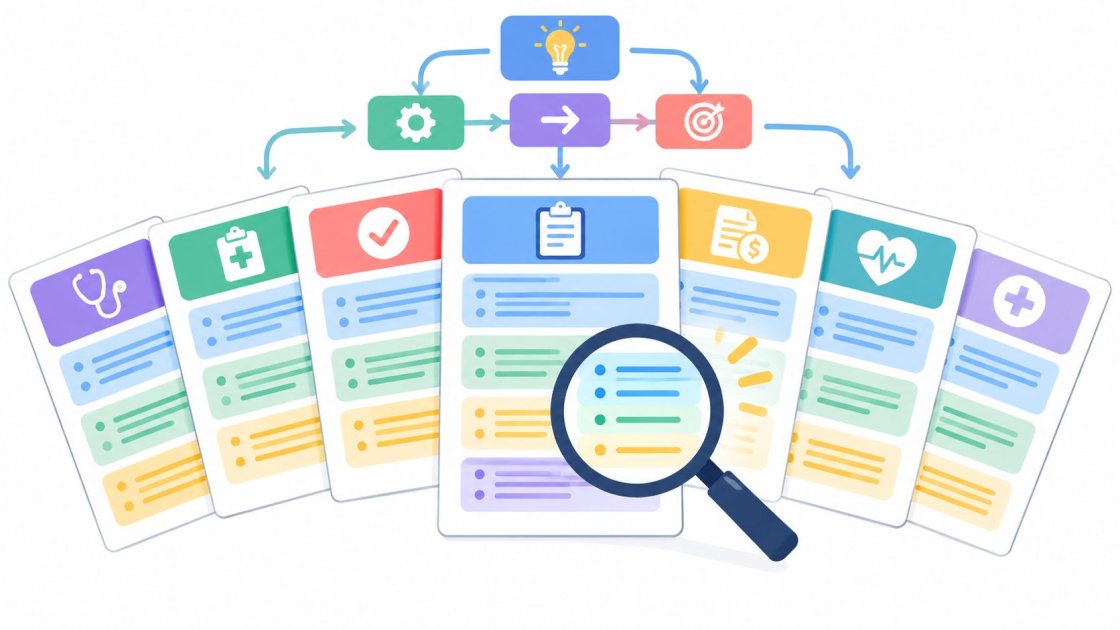
The last note often gets written after dinner, when the chart still has one loose end and the day has already run long. That is when a good sample matters most, because the report's job is already fixed, whether it is a handoff, a procedure record, a consult answer, or a discharge summary. Clear samples of medical reports shorten the work without turning the note into filler, and they help keep the plan complete enough for the next clinician to act on. For a practical example of structured templates, see AurenWell's document workflow templates.
1. SOAP Progress Note for a Primary Care Follow-Up Visit
A SOAP note keeps a follow-up visit tight and readable. Subjective, Objective, Assessment, and Plan give the chart a fixed order, so another clinician can scan the note and find the complaint, the exam, the clinical judgment, and the next step without hunting through paragraphs. That format also helps when the note needs to support billing, because CMS says the medical record should be complete, legible, and support the code submitted.
A diabetes follow-up is a clean example. Subjective holds the home glucose pattern and any symptoms. Objective holds the current blood pressure and any recent lab result. Assessment states whether control is improving, stable, or worse. Plan links the medication change to the problem and sets the next lab date.
Practical rule: write one Assessment line per active problem, then tie each order in the Plan back to that problem.
This sample prevents copy-forward from the last visit. Reused exam text can hide what changed today, and that makes the note harder to trust. For US billing, E/M level depends on medical decision-making or time, so the chart should support the level with current findings, not with habit.
A sinusitis visit follows the same pattern. Subjective records duration, fever, facial pain, and red flags. Objective records temperature and sinus tenderness. Plan records the antibiotic choice, if one is warranted, plus return precautions. For a compact template example, the structure in PatientNotes SOAP note examples PDF is a practical model for clinicians who want a faster draft that still reads like a real chart note.
Avoid copy-forward in the exam. Current findings belong in the current visit.
2. History and Physical Note
A History and Physical note has a wider job than a follow-up note. It stands alone as the first full record of the patient, so it carries the history, review of systems, exam, and initial assessment in one document. That is why it is longer than a SOAP note and why it fits admissions and new specialty evaluations.
A strong H&P sample starts with a new problem that needs a baseline. A cardiology consult for chest pain is a clear fit. The note should capture cardiac history, family history of early coronary disease, and the review of systems that was asked. A pre-op knee surgery H&P needs functional status, medication holds, and anesthesia risk factors, because the surgical team will rely on those details later.
What makes the sample usable
The common error this note prevents is vague ROS charting. If a symptom was not asked, it should not be implied. If it was asked, it should be recorded clearly. CMS expects the record to identify relevant health risks and document the reason for the encounter, the history, the exam, the assessment, and the care plan.
A practical H&P also uses specific exam language. “S3 gallop” is more useful than “normal heart sounds” when that is what was found. “Decreased sensation to light touch in the L5 distribution” is more useful than a generic neurologic line. Date and time should be on the page, because hospital workflow depends on when the record was created.
Use a specialty template so the sections match the questions that specialty always asks.
For hospital admissions, timing matters too. Federal rules set a 24-hour window around admission for the H&P, so the chart should be dated and timed with that in mind.
3. Hospital Discharge Summary
A discharge summary is the handoff document, not a chart recap. It tells the next clinician what happened, what changed, and what still needs follow-up. CMS expects the record to show the hospitalization outcome, disposition, and follow-up plan, so the note should be clear on first read.
The strongest sample is organized by problem, not by hospital day. That keeps the care course tied to decisions the receiving clinician can act on. A heart failure discharge summary should name the new diuretic dose, the potassium check, and the cardiology follow-up. An appendectomy summary should state the antibiotic course, wound care instructions, and return precautions.
Pending items need to sit in plain view. Labs, imaging, and other open results should each have one clinician listed for follow-up. That prevents the common error where everyone assumes someone else will chase the result. A medication table helps, but only if it explains why each drug changed, not just what was prescribed.
The best summaries go out the same day when possible, because the transfer of care is most fragile right after discharge. The discharge condition should be written so the next clinician can use it, not as vague praise or filler. If the patient is going home with a new oxygen need, a fresh wound, or a medication change, that should be obvious without searching.
A clean discharge summary is a safety tool first and a billing document second.
4. Procedure Note for a Joint Injection
Procedure notes live or die on detail. A joint injection note needs to show what was done, why it was done, how it was done, and how the patient tolerated it. If another clinician reads it later, the note should make the technique and the outcome clear without guesswork.
A right knee corticosteroid injection is a straightforward example. The note should name the diagnosis, the approach, the agent and dose, the patient's response, and whether image guidance was used. That supports the correct CPT code selection and helps any later reviewer understand exactly what happened. CMS distinguishes CPT and HCPCS as procedure code sets, while ICD-10-CM holds the diagnosis, so the report needs to separate the problem from the procedure clearly.
The error this sample prevents is under-documenting the technical part. “Steroid and local” is too thin. Laterality, guidance, concentration, and volume all matter. The after-care plan matters too, because the patient needs to know what happens next and the coder needs to know what service was rendered.
The note also becomes stronger when the signature is delayed until laterality is checked again. That sounds minor, but laterality errors are the kind that spread fast through charts and billing. For a dermatology excision, the same logic applies, only the key fields change. Lesion size, margins, closure type, and pathology submission belong in the note because they define the work that was done.
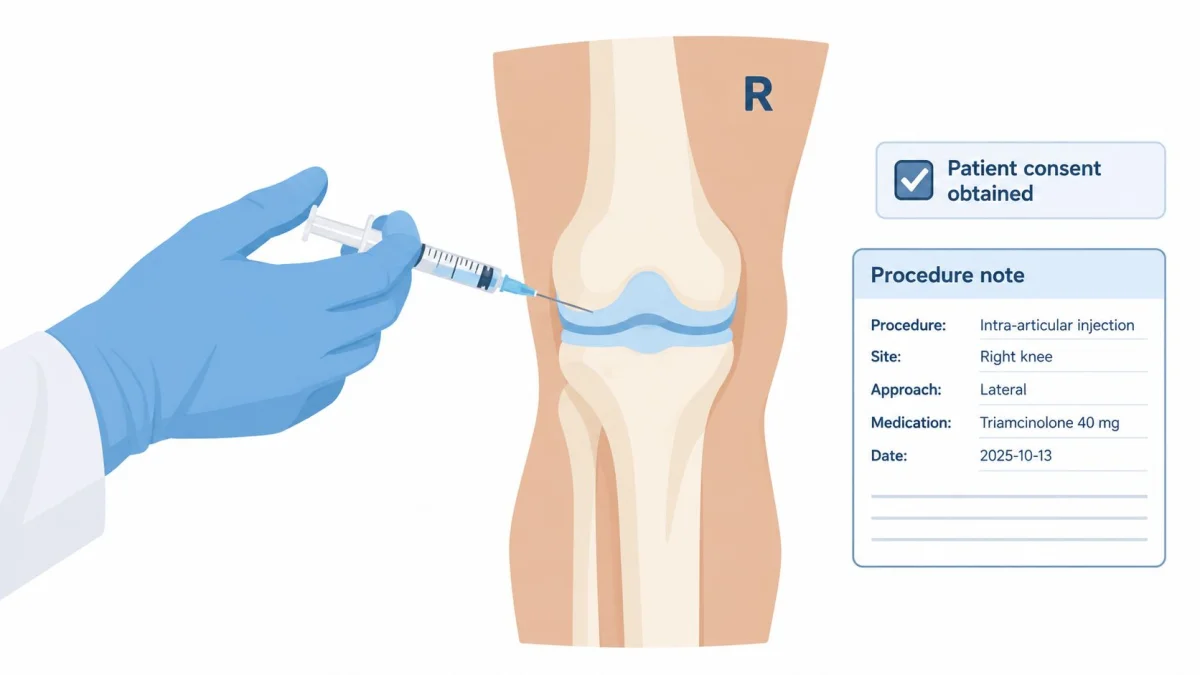
State the guidance method explicitly. If ultrasound or fluoroscopy was used, the billing code can change.
5. Psychotherapy Progress Note in DAP Format
DAP works well in behavioral health because it keeps interpretation separate from observation. Data holds what the client said and what the clinician observed. Assessment holds the clinical reading of the session. Plan holds the intervention, homework, and next step. That split matters because psychotherapy notes can sit in a different HIPAA category from the rest of the medical record when they contain the clinician's own analysis, so the storage decision has to be deliberate.
A generalized anxiety note gives the structure its best use case. Data records sleep changes and work stress. Assessment records how the client used a breathing exercise and how the session seemed to land. Plan assigns a thought record before the next visit. A medication follow-up note uses the same structure but adds the side effects in Data, the dose change in Plan, and the risk screen in Assessment.
The sample prevents a common clinical mistake, which is blending observation with interpretation. “Tearful throughout the visit” belongs in Data. “Appears overwhelmed by work conflict” belongs in Assessment if that is the clinician's reading. Keeping that line clean helps later reviewers, and it also helps the note stay defensible if the chart is audited.
A safe behavioral health template also makes risk visible every time it applies. Suicide and violence risk should not disappear because the session topic changed. The note should also use a specialty template so the risk section is always present, not inserted only when someone remembers.
For clinicians who want a side-by-side comparison of how DAP and SOAP differ in real charting, PatientNotes DAP notes vs SOAP notes is a useful internal reference.
6. Physical Therapy Initial Evaluation and Plan of Care
A physical therapy initial evaluation has to do more than name the pain site. It sets the baseline, shows the functional limits, and gives the team a plan they can measure against later. For Medicare patients, the plan of care also needs the required elements and certification by a physician or allowed practitioner, so the template should make those fields easy to find.
A low back pain evaluation shows the structure well. The note can record an Oswestry score, set a goal with a timeframe, and state visit frequency. A rotator cuff repair evaluation can use the same format with range of motion, strength grades, and a return-to-work target. Those details turn the note into a working plan, not a generic narrative.
Why the structure matters
The sample prevents a common documentation error, a plan with no measurable goal. “Improve function” is too vague. “Walk 30 minutes without rest in 6 weeks” gives the therapist, the payer, and the reviewer something concrete to check. It also supports medical necessity if the chart is reviewed later.
Goals should have a number, a time frame, and a function.
Consistency matters as well. The same outcome measure should be used at intake and at reassessment, or the trend becomes hard to read. Certification tracking can also slow a small practice, so a reminder before the plan expires belongs in the note workflow, not as an extra task on the side.
The sample also keeps the plan usable in real clinic work. If the visit frequency, home program, and reassessment point are all written down, the next clinician can continue care without rebuilding the plan from scratch. That is the practical value of a strong initial evaluation, it helps the next note stay clear, repeatable, and defensible.
7. Specialist Consultation Letter
A consultation letter answers one question first, then gives the reasoning. That order works well for specialist-to-referrer communication in the US and the UK, where the receiving clinician usually needs a clear plan more than a full chart dump.
A changing mole referral shows the structure clearly. The first two sentences should state the result, then the rest of the letter can cover the biopsy finding, the excision plan, and follow-up. A cardiology letter can work the same way after a normal echocardiogram, with the blood pressure adjustment and renal function check written as named actions.
The documentation error this sample prevents is burying the answer halfway down the page. Referrers should not have to search for the decision. Numbered actions help too, because they make ownership visible. “GP to repeat potassium in 2 weeks” is clearer than a soft suggestion that nobody owns.
Patients can see letters about their care, so the copy list needs the same care as the plan.
That matters in day-to-day practice. A clean, short, specific letter supports referral tracking and cuts down on back-and-forth calls. A vague one pushes the next clinician to rebuild the plan from scratch. A good consult letter leaves the referrer able to act without phoning for clarification.
For a structure that is easy to adapt across specialties, PatientNotes referral letters examples is a useful internal reference.
8. Dental Periodontal Examination Note
A periodontal examination note only works if the measurements are consistent. Pocket depths, bleeding, mobility, and bone loss have to be charted in a repeatable order, or the trend line becomes useless. The note also has to support the CDT code chosen, because in US dental billing the chart and the code need to match.
A periodontitis case shows the value of the sample. If a periodontist records 6 mm pockets on the distal sites of tooth 19 with bleeding on probing and documents Stage III, Grade B periodontitis, the plan can then point to scaling and root planing by quadrant. A recall exam can show stable 3 mm pockets and no bleeding, which supports a six-month return.
The error this sample prevents is uneven charting. One missing site can throw off the whole interpretation. A fixed order, such as tooth 1 to 32, buccal then lingual, makes that less likely. So does using the same measurement points every visit, because then the trend really means something.
For US billing, common CDT codes include D0180 for a thorough periodontal evaluation and D4341 and D4342 for scaling and root planing, depending on the number of teeth per quadrant. The code set is what it is, but the note still has to prove why the chosen code fits the exam. Confirming the periodontal classification system in use also matters, because the assessment should speak the same language as the rest of the chart.
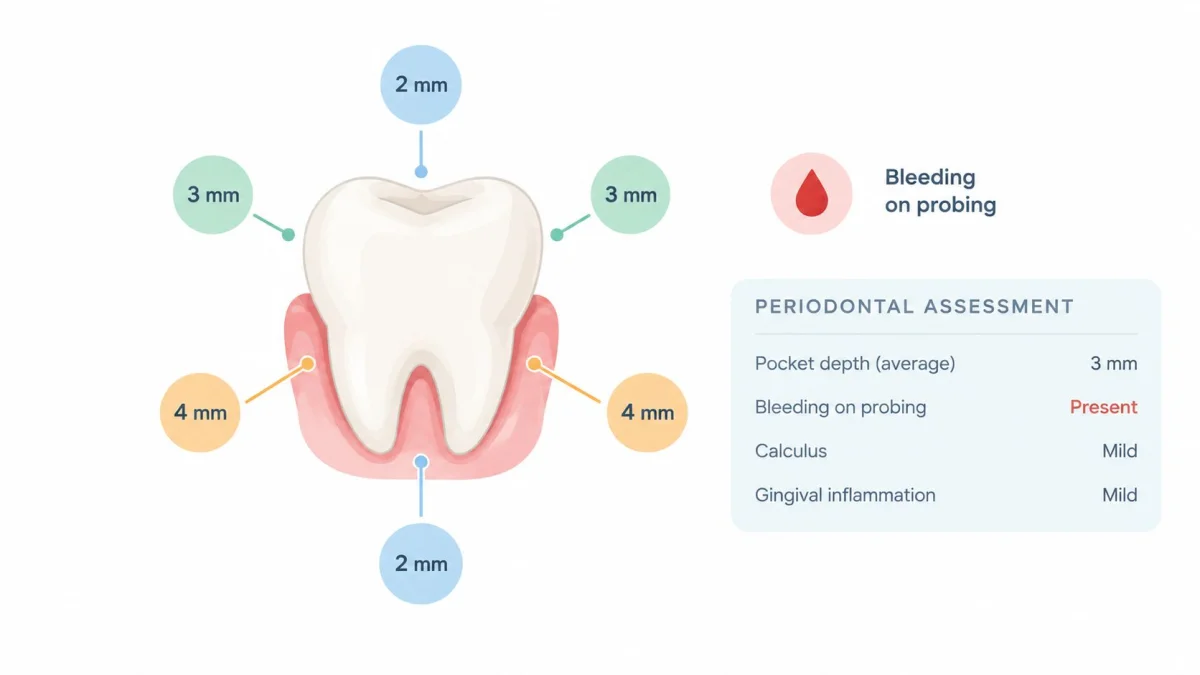
A fixed tooth-by-tooth order keeps sites from getting skipped during a busy recall.
Comparison of 8 Medical Report Samples
| Document Type | Implementation complexity | Resource requirements | Expected outcomes | Ideal use cases | Key advantages |
|---|---|---|---|---|---|
| SOAP Progress Note (Primary Care Follow-Up Visit) | Low, four fixed sections | Minimal time per visit; basic vitals/tests | Concise problem-focused record; supports E/M level selection | Primary care follow-up, acute visits, medication reviews | Familiar, quick to scan, links plan to each problem |
| History and Physical (H&P) Note | High, comprehensive baseline record | Significant time; full ROS, detailed exam, prior records | Complete admission baseline that other notes build on | Hospital admission, pre-operative evaluation, new-patient specialty consult | Meets hospital/regulatory requirements; thorough review of systems |
| Hospital Discharge Summary | Medium, synthesis of inpatient stay | Access to inpatient data, med reconciliation, follow-up details | Safe handoff with diagnoses, course, meds, and follow-up plan | Patient discharge, transitions of care to outpatient/next facility | Reduces readmission risk; provides clear transition instructions |
| Procedure Note (Joint Injection) | Low–Medium, focused but specific details required | Documentation of consent, laterality, agent/dose, guidance used | Billable procedural record; reproducible technique and coding basis | Joint injections, minor office procedures, procedural billing | Supports correct CPT coding and laterality; concise clinical record |
| Psychotherapy Progress Note (DAP Format) | Low, three-part session note with nuance | Clinician time, risk/safety documentation, privacy controls | Session-level progress, risk assessment, planned interventions | Therapy sessions, psychiatric follow-ups, behavioral health care | Separates observed data from interpretation; flexible and brief |
| Physical Therapy Initial Evaluation & Plan of Care | High, detailed measures, goals, and POC elements | Outcome measures, therapist time, physician certification for Medicare | Measurable goals and documented medical necessity for therapy | Initial PT evaluation, rehab planning, ongoing therapy authorizations | Supports payer review; measurable goals simplify progress tracking |
| Specialist Consultation Letter | Medium, concise but requires synthesis | Results access, clear recommendations, timely transmission | Actionable guidance for referrer; reduces duplicate testing | Specialist consults to GPs/PCPs, referral responses, care coordination | Answers referral question first; assigns responsibilities clearly |
| Dental Periodontal Examination Note | Medium–High, extensive tooth-by-tooth charting | Time-consuming charting, radiographs, consistent measurement points | Comparable periodontal metrics over time; supports CDT coding | Periodontal assessment, treatment planning, recall monitoring | Standardized measurements for progression tracking; billing support |
Start With the Note You Write Most Often
The best place to begin is the report type that gets written most often in the day-to-day workflow. That might be a SOAP note, a consult letter, a discharge summary, or a procedure note, but the logic is the same. Copy the structure, then check each field against the rule or guideline that applies in that setting, because CMS, NHS guidance, HIPAA, and specialty billing rules do not reward generic documentation (CMS evaluation and management documentation, HHS business associate agreement guidance, NHS Professionals record-keeping guidance).
The safest template is the one that keeps the fields that prevent mistakes, such as laterality, pending results, named follow-up owners, and the reason for the encounter. It should leave out the lines that only add volume. For small practices, that usually means adapting one strong sample to the specialty instead of forcing every visit into the same shape.
PatientNotes fits this workflow for clinicians who want structured templates without starting from a blank screen. It offers SOAP, H&P, procedure, consultation, discharge, and letter templates, plus specialty templates and a template builder, so the note can stay tied to the clinical job instead of a generic format. For practices that want to test a template-driven workflow, the next step is simple, visit PatientNotes and try it on three real notes this week.
PatientNotes helps clinicians turn visit audio into structured notes, tasks, and patient instructions in the clinician's own language, with templates that fit the way the chart is used in practice. For clinicians who want to reduce after-hours charting and keep samples of medical reports tied to real workflow, PatientNotes is a practical place to start.